Matt Godden

human : artist

Bring content into view.

Main : Timeline

Pinned and chronological feed of posts. Check The State of The Art for the big picture.

Be careful what you wish for…

There’s an idea spreading around the Mac-using world at the moment that Apple should abandon iTunes, and start again from scratch with separate apps handling its various abilities.

There’s one problem with this which gives me pause.

Every change Apple has made to iTunes since version 10, has made the product worse. What has made it worse, is not the overloading of features, but the mindset behind the design of the new features.

UI elements no longer have tooltips. Podcasts have been screwed up, reoriented around streaming and breaking functionality for the download-and-keep model. Lets not forget the disastrous iTunes 11.2 “upgrade” which introduced a new “saved” podcasts feature, which allowed you to protect individual episodes from auto-deletion – and which the upgrade process told you would be applied to ALL of your previously downloaded podcast episodes. That function was faulty, and since iTunes had auto delete after listening defaulted to on, upto half the episodes in many of my stored podcasts disappeared in an instant. Not in the trash, no undo, just gone.

Can’t you just re-download them?

That presumes two things, firstly that bandwidth is free and uncapped, and secondly, that all podcasts keep every episode in their feed forever. Many don’t. Some of my subscriptions have gone offline entirely. The point is, user data is sacrosanct, and deleting it without an explicit command from a user, with an “are you sure” dialog is the greatest sin a piece of software can commit.

This is a symptom of a part of the larger problem Apple has, those who are in charge of the direction of its products are possessed of such immense bandwidth privilege, they seem incapable of designing products for an offline reality. The sheer insanity of using a server on one side of the world, to move a document between two devices a foot apart, or that two devices which can be physically cabled together, can’t share calendar reminders without an internet connection, is hard for me to wrap my head around.

So, given that all the things which are bad about iTunes, are post-version-10 changes to the product, what makes anyone think that an all-new music solution would be anything other than a reflection (and likely a magnification) of the philosophy which created all these ruinous changes?

What’s wrong with iTunes, are the new parts of iTunes, not the presence of what is increasingly becoming “legacy” functionality.


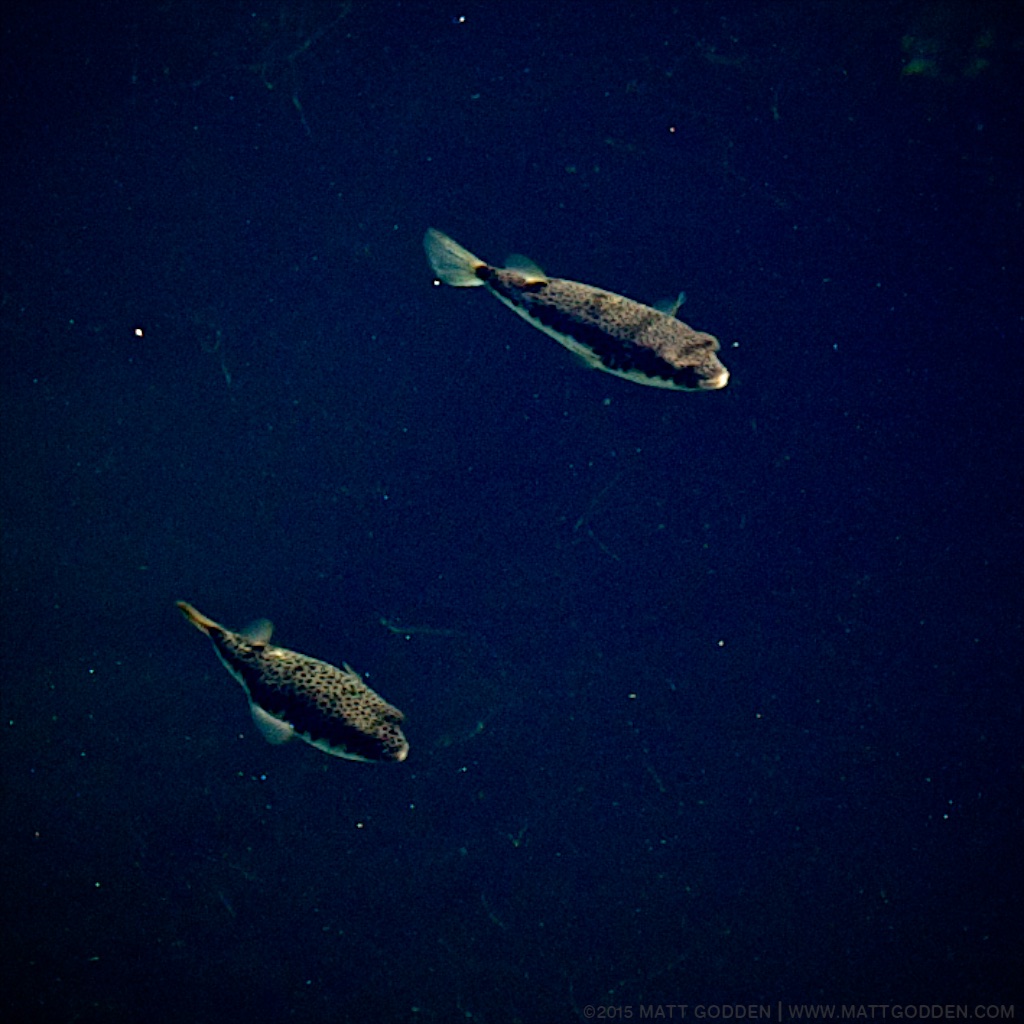
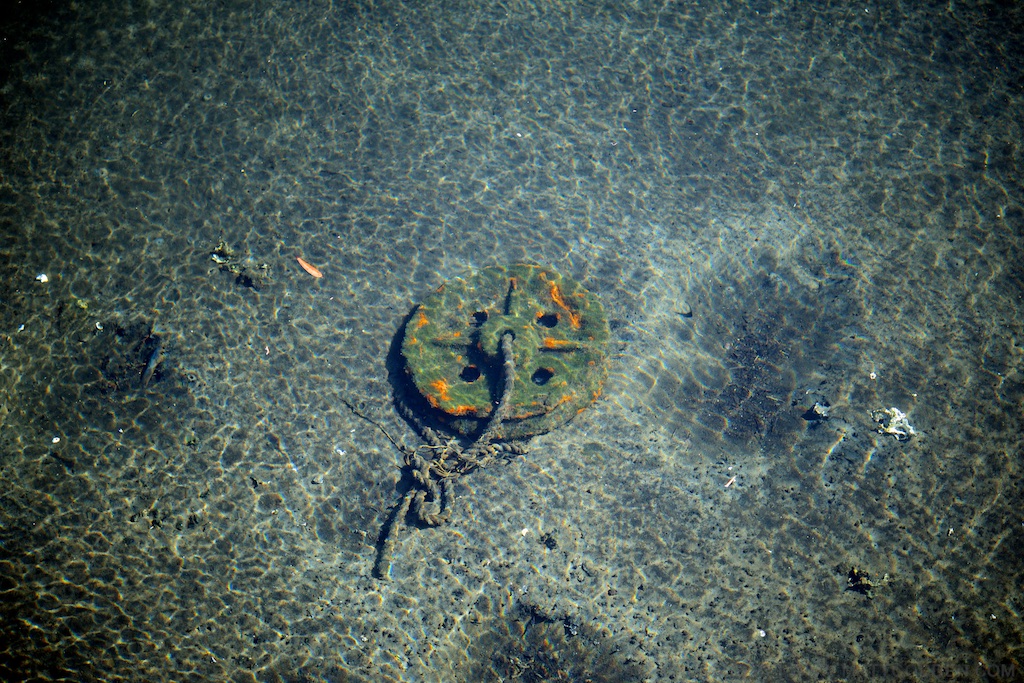
Fish (Noir) Experiments.

These are from two years ago, but since I’m heading to the same location, having planned around the position of the sun and the stage of the tide to try to reshoot with a polarising lens to cut glare, I thought it was worth putting them up for a comparison.


Planet Serenghetto

The final proof of concept for my Little Planet production process. This is the image where everything clicked into place – camera, panoramic mount, and stitching software. Shooting before dawn in this location yielded a number of images. The other major finished piece – Dawn at The Serenghetto Waterhole, was entered into the Head-On photo competition.


How I’d Rewrite the Star Wars Prequels

So I’ve been listening to The Incomparable Podcast’s post-mortems of the Star Wars prequels, which I would recommend everyone have a listen to. They cover how wooden the acting is, how creepy, leery creepy Anakin Skywalker is, and how in the end, the character portrayed – a whiny little idiot (no really, a genuinely ignorant brick-stupid person, who gets played for a fool) isn’t recognisable as the Darth Vader that we see in the actual real star wars films – a dignified, menacing, capable and above all, self-assured, enforcer and fixer.

So, in light of listening to all of this, and the Redletter Media critiques, I thought I’d have a bit of a go at how I would have structured the star wars prequels – cause if there’s one set of films that’s in a dire need of a reboot, it’s Episode 1, 2 & 3. This isn’t going to be a full narrative or fanfic, more a loose collection of elements could be done differently to make for more compelling plots, and more believable characters. Largely it’s just an exercise on my own part to work in a world I didn’t create.

Disclaimer: I’m not going to claim that any of these ideas are unique or original – I’ve only seen the films (and owned the toys / McDonalds meal cups etc when the holy trilogy first came out), not any of the extended universe, but they’re thoughts I’ve had without knowingly taking from other sources.

The Force and its relationship to the Jedi & Sith

Midichlorians are gone – a mechanism isn’t necessary.

The Force works differently depending on whether one pursues the light or the dark side.

  • Light: The user becomes more and more powerful as they age, culminating in the ability to become a force ghost when they die, if they live long enough. Actively using the force to effect the world slows down one’s development – it works like compound interest in a savings account, and it costs every time it’s used.
  • Dark: as above, with age comes power. The Dark Side can prolong corporeal existence, but when one dies, that’s it. Using the force to effect the world speeds up one’s development – it works like an exercised muscle.
  • They cancel each other out – so pursuing one path reduces the time available to pursue the other to its critical mass of immortality.

This sets up the Jedi as conservative, passive – avoiding conflict and devoting themselves to meditation because they have an eternal payoff at the end, which they risk if they die too young, or are too profligate with their Force use. Their “negotiation” skills are more about jedi mind tricking the various parties, than combat. Their martial skills are of prime importance when combat is required, because they need to avoid using the force in an active manner.

The Sith get a vampyric element to them – they can speed up their development by harvesting other force-users, both Sith and Jedi. Their almost mythical status is because it’s rare for a Jedi to meet one and survive – they fight and use the force so aggressively. If a Jedi is “eaten” by a Sith, they don’t get to be a force ghost – they’re gone completely.

Like elephants, their strategy is to get so powerful that they have no natural predators left, and can live out a perpetual corporeal existence.

Biology and the Force

He’s more machine than man now, twisted and evil.

The force depends on bodily integrity – losing a limb will permanently retard development and reduce one’s end-potential. This is why Darth Vader doesn’t get to the level of having force lightning, and is instead more reliant on the lightsaber than a Sith would normally be. His shot at immortality is that there’s less of his human body left to preserve, the technology can keep him going in lieu of the reduced preservation abilities of the Dark side. General Grievous is a great example of a Sith that has been so thoroughly damaged that now he’s only a collection of organs, and there simply isn’t enough meat left of him to channel the force at all.

Above all, the Jedi, and to a lesser extent the Sith, are body-proud.  Anakin’s loss of a hand is part of what sets him on a path to the Dark Side – knowing that he’ll never be as good as he should be because of his “imperfection” gnaws away at him, beginning the slow poisoning his mind.

 The Political Opening

The Jedi Council could actually be ghosts as far as the eye can see, like the city under the mountain scene in the final Lord of The Rings film. Their inertia against taking personal risk is symptomatic (and possibly causative) of the general malaise within the galactic society at the time – democracy is failing, the government is ruled by a corrupt bureaucracy, and corporate thuggery is effectively oppressing the galaxy. The Jedi experience none of this, and what they see of it, it’s not their place to get involved unless the bureaucracy requests it, which only happens when it’s actually helping the corrupt.

By positioning the Jedi as actually being bad guys from an objective standpoint, Anakin has a legitimate reason to hunt them down and destroy their power structure. Darth Vader has no reasonable motivation unless he’s righteous in what he does – he has to believe the Empire is achieving something.

Anakin’s Fall

The Jedi’s refusal to act when the clone wars erupt (could be nothing to do with the creation of stormtroopers) culminates in entire planets being devastated (which neatly mirrors the Empire later creating a device for that specific purpose) – genocide occurring over and over. Anakin is expelled from the order for trying to rally the people of a planet which is to be cleansed. The great crime of “getting involved”.

The Creation of Darth Vader

Anakin turns himself into Vader, the cyborg. His climatic transformation occurs as he’s fighting his way through the Jedi temple. He fights more and more ferociously, as we see Luke do at the  end of Return Of The Jedi, but using the force, and being injured in the process. In one of the minor boss battles during the process, he loses an arm, and rips off the arm of a robot support soldier, and using the force, fuses it into his body – much like Tetsuo using telekinesis to make an artificial arm in Akira. This process continues, a leg is blown off by a laser, and he rips a robot’s leg off, making it into a functional limb through sheer force of will, depleting his light side reserves, and so he takes the final step, and consumes the next Jedi he encounters, becoming a Sith. He eventually works his way through the temple, killing, consuming and being shot and chopped up, until by then end, he’s a patchwork of different bits of robots, and all the Jedi are dead and consumed.

And he never says “noooooooo” – the best bit from The Incomparable was one of the panellists suggesting that Vader’s first word post-transformation should be “good”.

Once Vader is created, and the Empire established, he is a peacemaker. Sure the “stop fighting or I’ll come back here and kill all of you” form of diplomacy is a bit arbitrary, but he’s seen what galactic conflict and genocide, and “not getting involved” can do. He believes in what he’s doing. He is, in his worldview, the good guy.

Related to that, do we ever actually see The Empire do anything “evil” outside of the scale of what it is? Is the destruction of an entire planet with a terrorist leadership that much worse an act (in terms of scale) for a galactic government, than the American government nuking a couple of Japanese cities? You don’t see storm troopers beating civilians in the streets, you don’t see The Empire using slaves – they genuinely come across as an effective professional military trying to do a difficult job, keeping peace on a galactic scale. Calrissian complains about taxes levied on Bespin, as if being required to follow regulations in the extraction of natural resources, and paying taxes on your earnings is the very face of despotic evil.

Nope, I’ve decided The Empire were actually the good guys.


Why publish on iBooks?

Edit: Please note, while this article is still valid, as of 2021 I have moved my efforts towards publishing on an independent web store.


Something that’s been of interest to me lately, is why so few of the local comics people I know publish on Apple’s iBooks store. It seems obvious to me why you would, but I can also see the reasons why you wouldn’t – it’s a single platform (Mac and iOS) reading solution, and requires that you have an American taxation registration. There’s also only one graphical tool for producing books for it, InDesign Creative Cloud, which is a $20-$30 monthly subscription cost (or $240/year). Note, Apple offers the iBooks Author application, but it doesn’t do paginated reading, or allow images to be zoomed larger than full screen.

But, if you were to look at iBooks, here’s a list of the reasons to compare against whatever solution you’re using currently:

  • Revenue Cut: The basic revenue split is 70% you, 30% to Apple. Any other comics reading / buying app that offers in-app purchasing means the app vendor is paying you out of their 70% cut of the cover price.
  • First Party Application: iBooks is already on the device, and customers can buy books within the application.
  • Price Control: Apple can never override your price to discount your book and lower the market’s expectation of the value of your work.
  • Product Control: You do all the authoring, Apple doesn’t change your files, resize your images etc. What you create and test, is what the reader gets.
  • Preview Control: You can author the preview separately to choose what it contains, and Apple adds a page with a “buy full version” button to the end.
  • Free Books Cost You Nothing: Offer your books for free, you don’t pay any fees at all. If you’re only offering free books, you don’t even need to fill in the financials and tax information.
  • Quick Approval: Apple claim that 90% of books get reviewed within 1 day. In practice I’ve found it takes about 7-10 days from submission to being on sale.
  • Copy Protection: If you want to use DRM, Apple’s solution is unobtrusive and effective. If you choose to go DRM-Free, your file is still watermarked to the buyer, so you can get an idea of where that torrented version originated.
  • Analytics: live sales and revenue data broken down by territory and exportable to spreadsheets.
  • Good Tech Support: I’ve only had positive experiences with Apple’s book developer support staff. They have an Australian freecall phone number, and the staff take ownership of issues.
  • No Multiyear Contract: You can pull your book from the store or suspend sales at any time. People who’ve already bought it will still be able to download it, but it won’t be available to anyone else.
  • No Exclusivity Requirements: you can put your book in any other store (the iBooks Author application, which isn’t really good for comics, only produces files for the iBooks store).

The New Apple Paradigm

It’s time for a bit of recreational Kremlinology regarding Apple’s strategies.

When Intel and Apple brought the Thunderbolt interface into the world, there were a lot of interesting possibilities created. Thunderbolt being essentially the PCI bus on a wire, many peripheral solutions that were previously done with internal cards, could now be created as breakout boxes, which could serve both desktop and laptop users.

Since Thunderbolt is capable of carrying all of the other peripheral busses, one great solution it enabled was Apple’s Thunderbolt display, which could act as a peripheral hub for a laptop. You plug power into the display, and then the display has an upstream cable which branches into thunderbolt, and Magsafe power for the laptop. So with that one cable, your laptop effectively becomes a desktop (and your laptop’s power adapter stays in your travel bag).

My 68 year old mother, who is an accountant, uses this solution. She has a light, compact, 13″ Macbook Air, with which she travels interstate every quarter to work with clients. In her home office she has the big display, keyboard, mouse etc. On the road, the system is light & compact, at home it has screen space for her MYOB Windows VMs, remote desktop sessions with client computers etc.

The new Macbook isn’t set up to do his. It’s only external display options are HDMI and VGA, and with no Thunderbolt due to its sole USB3-C port, arguably, it never will.

It remains to be seen whether this is a repeat of the goof that was the original 13″ Aluminium Macbook (which dropped the firewire of its polycarbonate incarnation, only to regain it in the next revision), or whether this is a new paradigm of less versatile Macs, which have a narrower but deeper usability. By forgoing all the ports that make a laptop able to be both a portable, and desktop, Apple have made a computer that is arguably better when it’s being a portable.

The question is whether this will make its way into the rest of the laptop lineup. If so, I think we can probably say that the paradigm that Apple is heading towards, is this: People who need both desktop and laptop usage scenarios, should be buying a desktop and a laptop, and then using Continuity to move their work state between devices. The net result of more device sales for Apple is obviously just a happy coincidence.


Rotating a .NEF Raw File

One of the problems I’ve had using Apple’s (now end-of-lifed) Aperture photography software, is that it doesn’t make changes to an original RAW file. Everything changed within it is done using versions – essentially metadata – so that you can have a dozen different variants of a file, but only ever have one taking up space on disk.

It’s a great idea, except when your original has a problem, like for example the camera has recorded orientation information that you don’t want applied. Aperture provides no way to alter the RAW file. You can create a rotated version in Aperture, but exporting the RAW will output the original un-rotated edition.

The solution is to use Nikon’s own ViewNX software. It’s ugly as sin, not at all Mac-like, but when you rotate a RAW file in it, the file on disk is rotated, while staying as a RAW.

Then, you have to reimport the image as a new file, and delete the old version. Simply replacing the old one with the rotated version in Aperture’s library won’t show up as having been changed when you re-launch Aperture.


iOS 8 Photos app – DSLR Fail.

With the update to iOS 8, Apple obsolesced the iOS version of iPhoto. Notwithstanding that iPhoto was a paid product, which is made unusable without warning, the replacement has certain issues.

The replacement for iPhoto is an expanded set of capabilities for the Photos app. What it doesn’t have, however, is the ability to view EXIF data for the images, so if you’re using the iPad to triage images in the field, you can’t see any of the technical details of your shots – no aperture, iso, shutter speed or anything. Worse still, when you try to edit images…

Photos can’t perform more than a single edit on an image without it pixelating like this.

These add to the commonly held view that things at Apple are starting to go off the rails, at a systemic, company-wide level. Within Apple’s software efforts, new features are being brought to market before they’re thoroughly ready. More importantly, old working solutions are removed from users’ systems before their replacements are up to the task.