Nuff said.
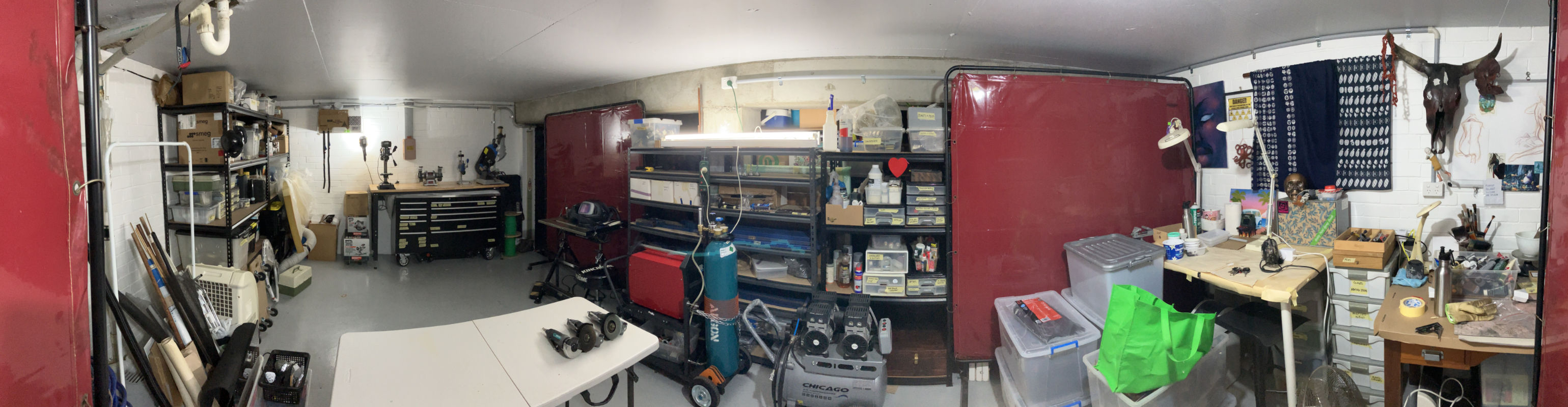
This is what I’ve been building up towards for a while; a working space where everything can be used, without having to be packed away after every session.
human : artist

Reviews, rants, and academic polemics.
Nuff said.
This is what I’ve been building up towards for a while; a working space where everything can be used, without having to be packed away after every session.
Progress is slow, and steady, but over the past week I managed to fire up the welder in my new Brisbane-based workspace. All my tools, powered and not, have been loaded into the tool chest I bought, and it has been placed under the workbench I also bought. From here, the next stage is to fabricate legs, with new baseplates that can bolt-on in place of the casters on the tool chest, so it can be levelled on the floor, a tad lower under the workbench.
It was a tense experience, getting the welder back into service after four of so years idle. However, once I went through the instructions, replaced an o-ring on the regulator, and brought the helmet’s settings under control, things started working out correctly.
My biggest problem is that the gloves are too baggy, they rob me of all my dexterity. Small welding gloves are very rare. I’d also like to scope out a smaller TIG torch. I have a very strong feeling that the tools I’m using are making it hard for me to learn the muscle skills necessary to use them correctly.
Solving a problem of how to mount my triple display setup. Everything has to be fabricated from scratch, after a pair of C-Brackets I was going to use to do the base failed to be as advertised.
Made from 100mm x 5mm Steel bar, 25mm by 5mm steel bar, and M12 threaded rod. Also, some rubber padding.
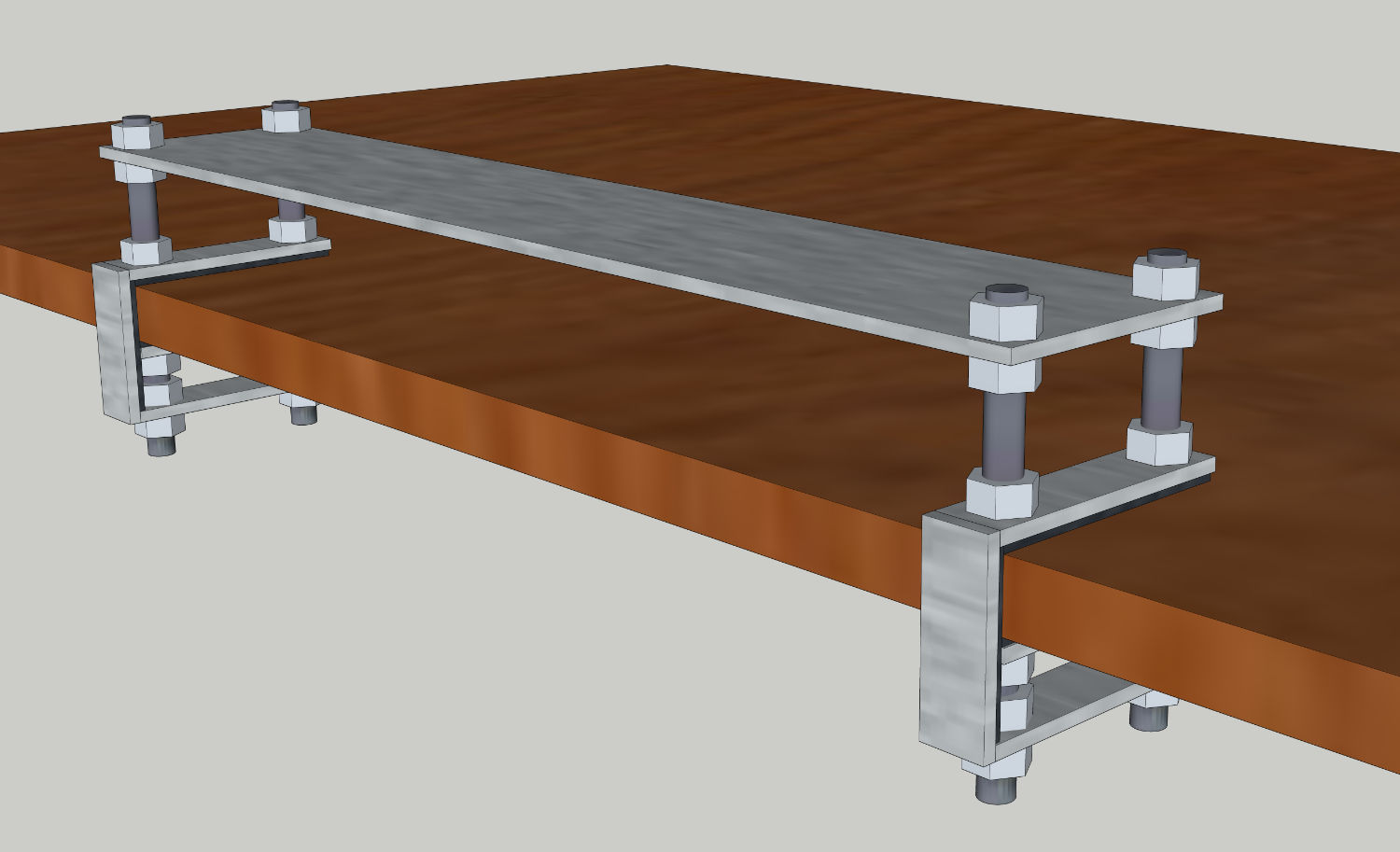
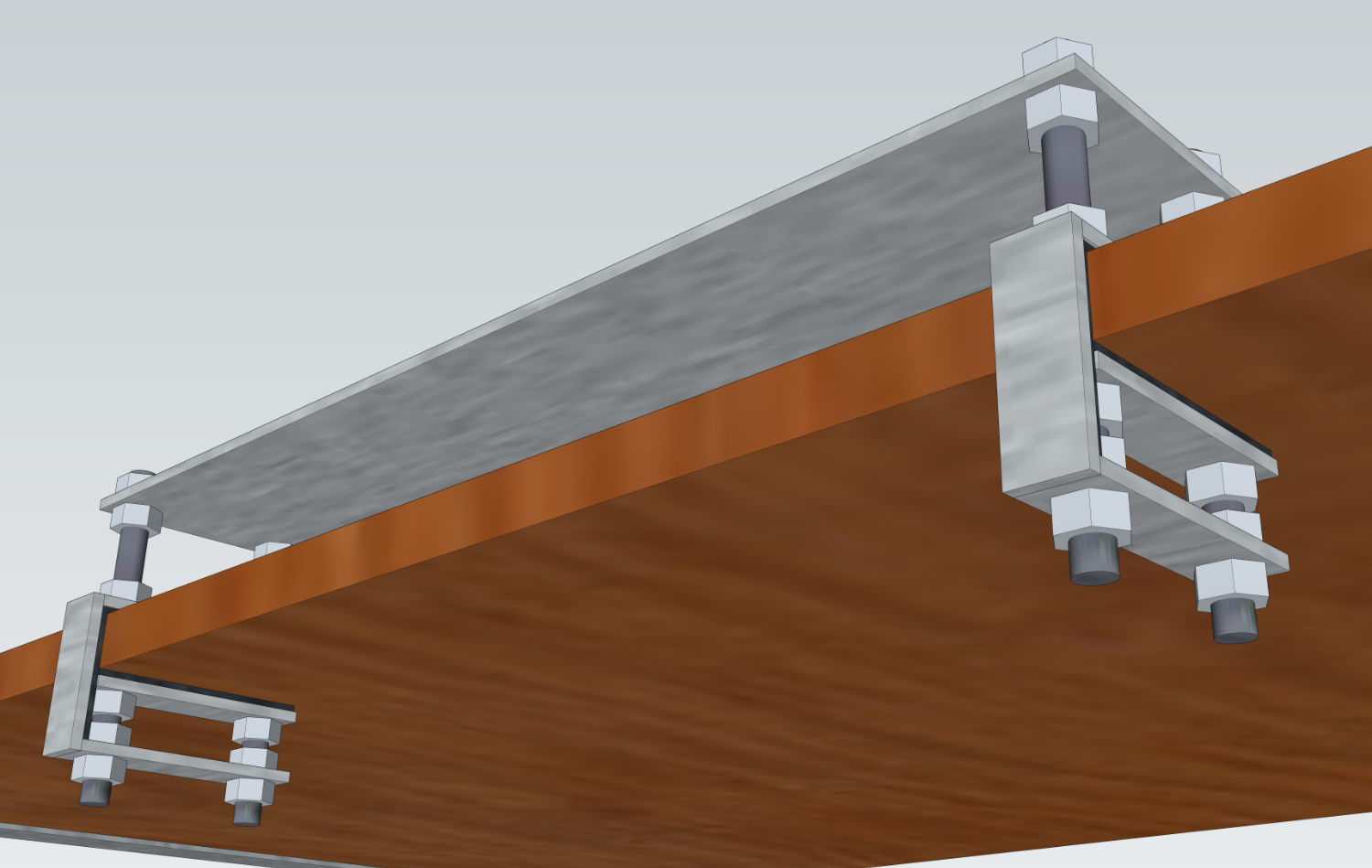
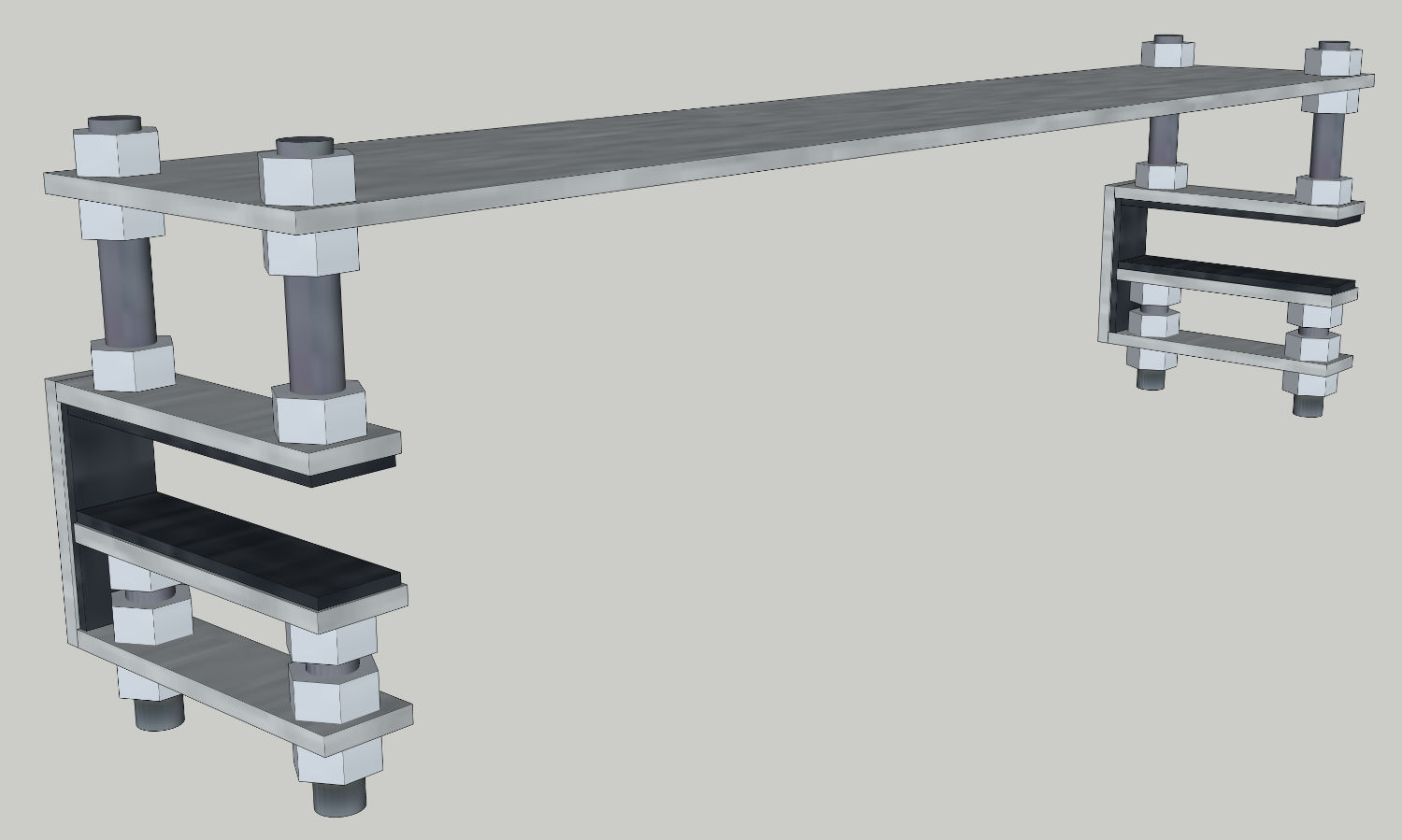
It’s designed so that the nuts on the threaded rod supporting the top deck act as a levelling system.
The current gear modification project; to replace two of the castors on my new toolbox with levelling feet.
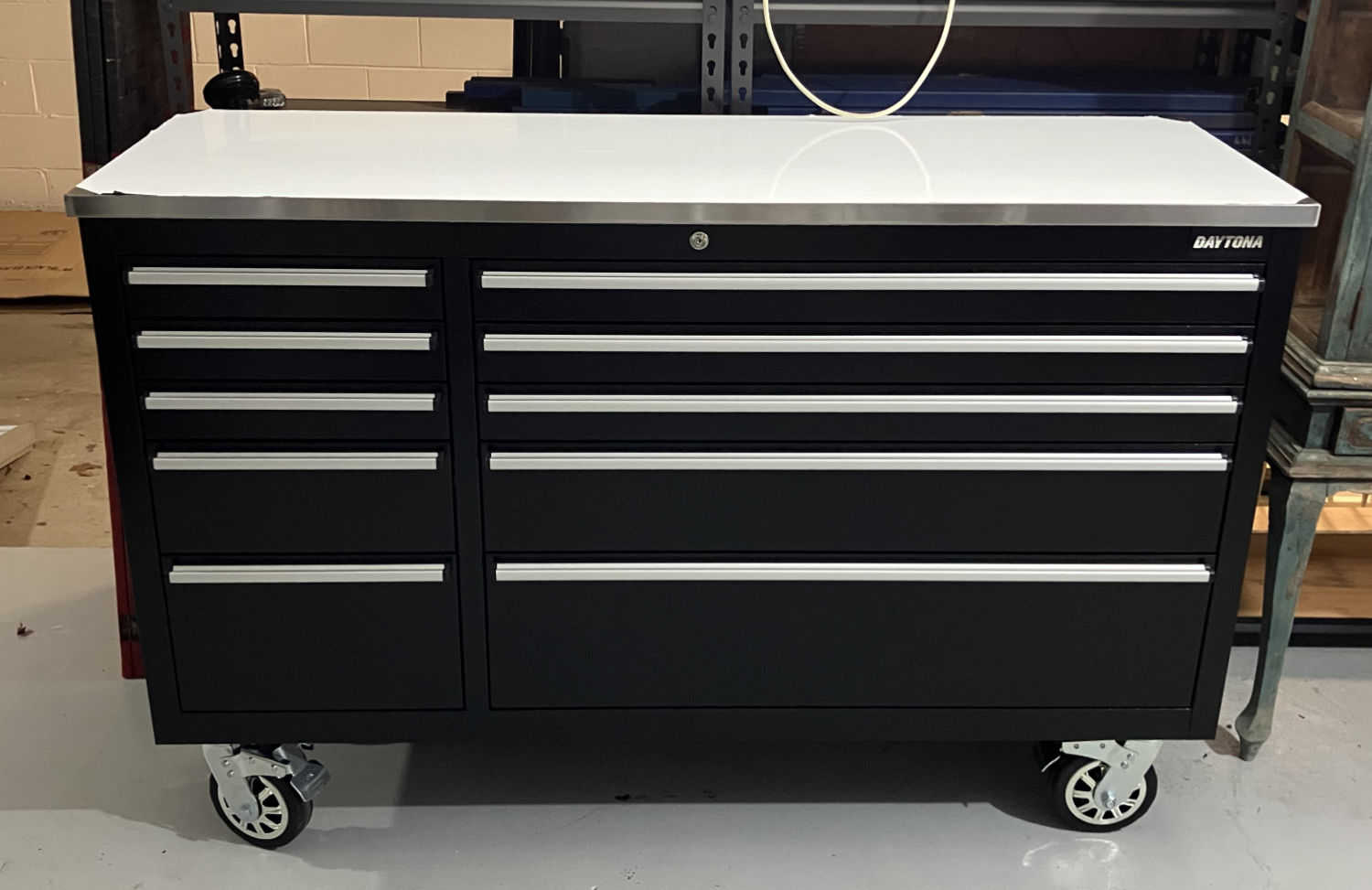
The problem to solve, is that the toolbox is going under a workbench, on a sloping area of floor. The toolbox can fit under the bench at one end, but not the high side. The solution is to remove two wheels, and replace them with levelling feet.
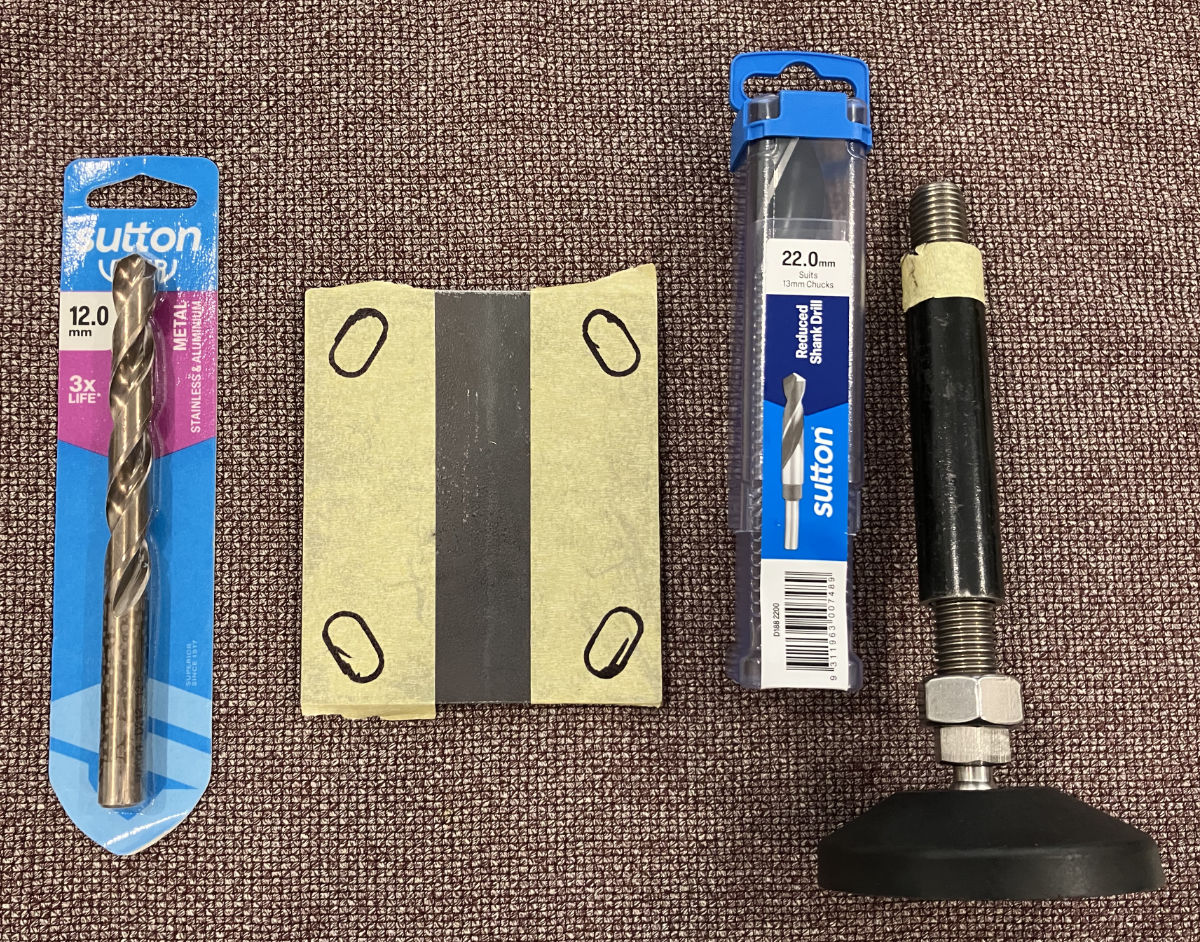
Here we have 5mm thick steel plate, cut to the same size as the baseplates of the castors, with the mounting holes traced. The way it works is pretty simple, the tube will be welded to the centre, cut to length. The thread for the foot will be cut to length. The large nut on the bottom of the thread is turned with a spanner, and it climbs the thread, pushing the leg up.
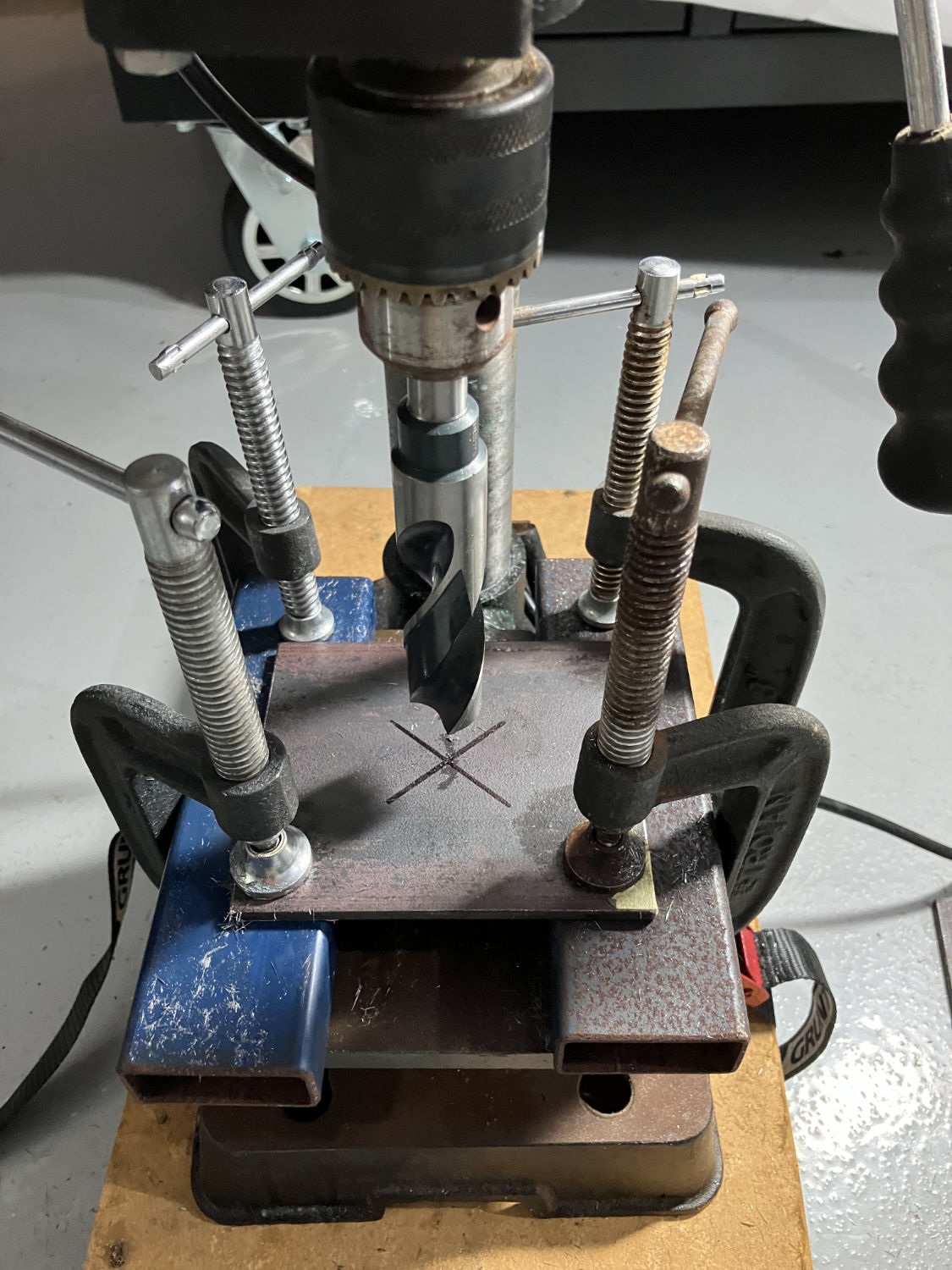
Chonky drill is chonky. I made a decision to drill out the centre of the plate, so the tube section can be welded from above, and below. It also provides a bit more depth for the leg thread, which can emerge into a void above the centre of the baseplate.
The last couple of months have been some pretty intensive nights, some of the most solid, prolonged work I’ve done for a while, resulting in:

A forum for users of card-slot expandable Macs, made relevant now that Apple has cancelled the Mac Pro as a product.
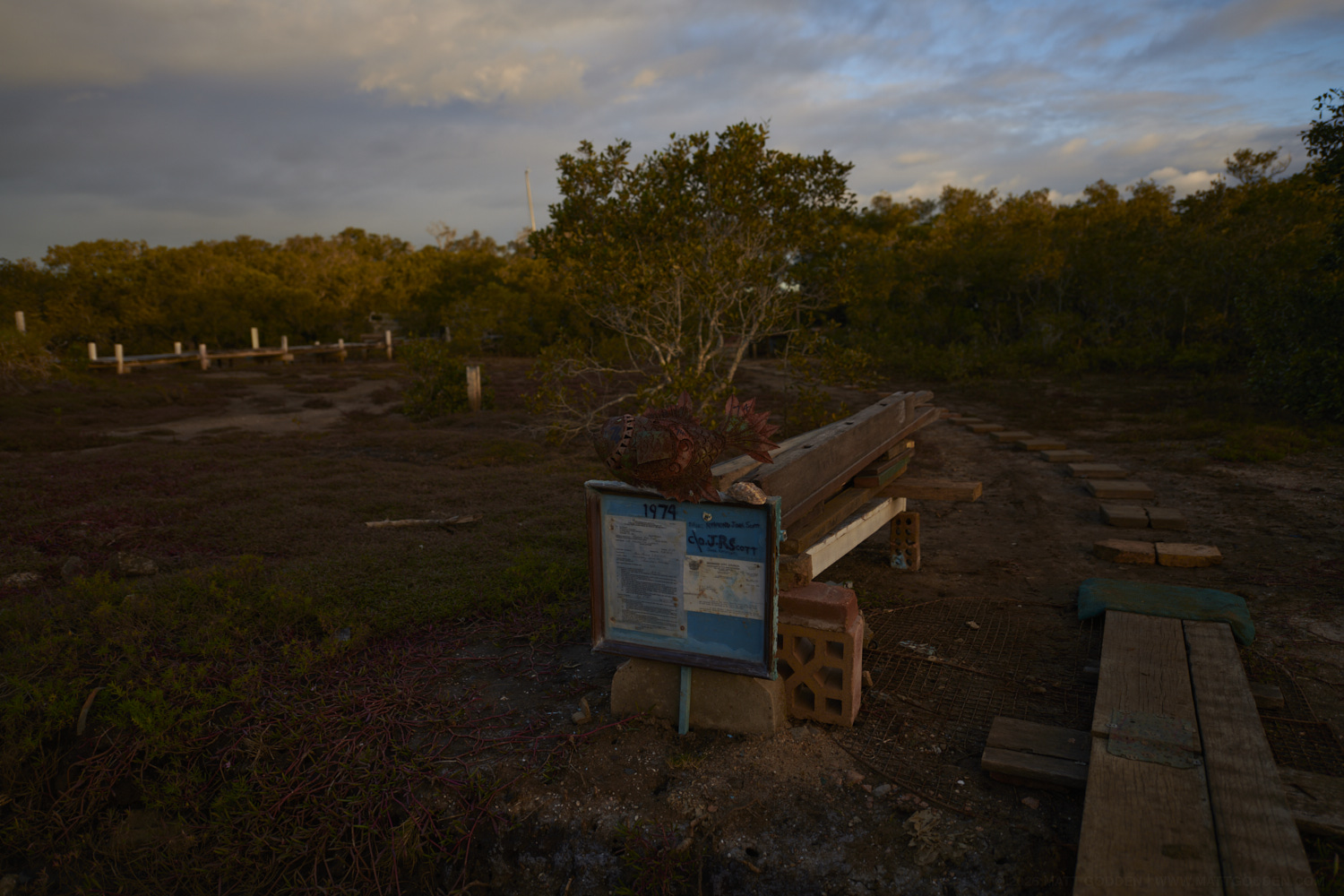
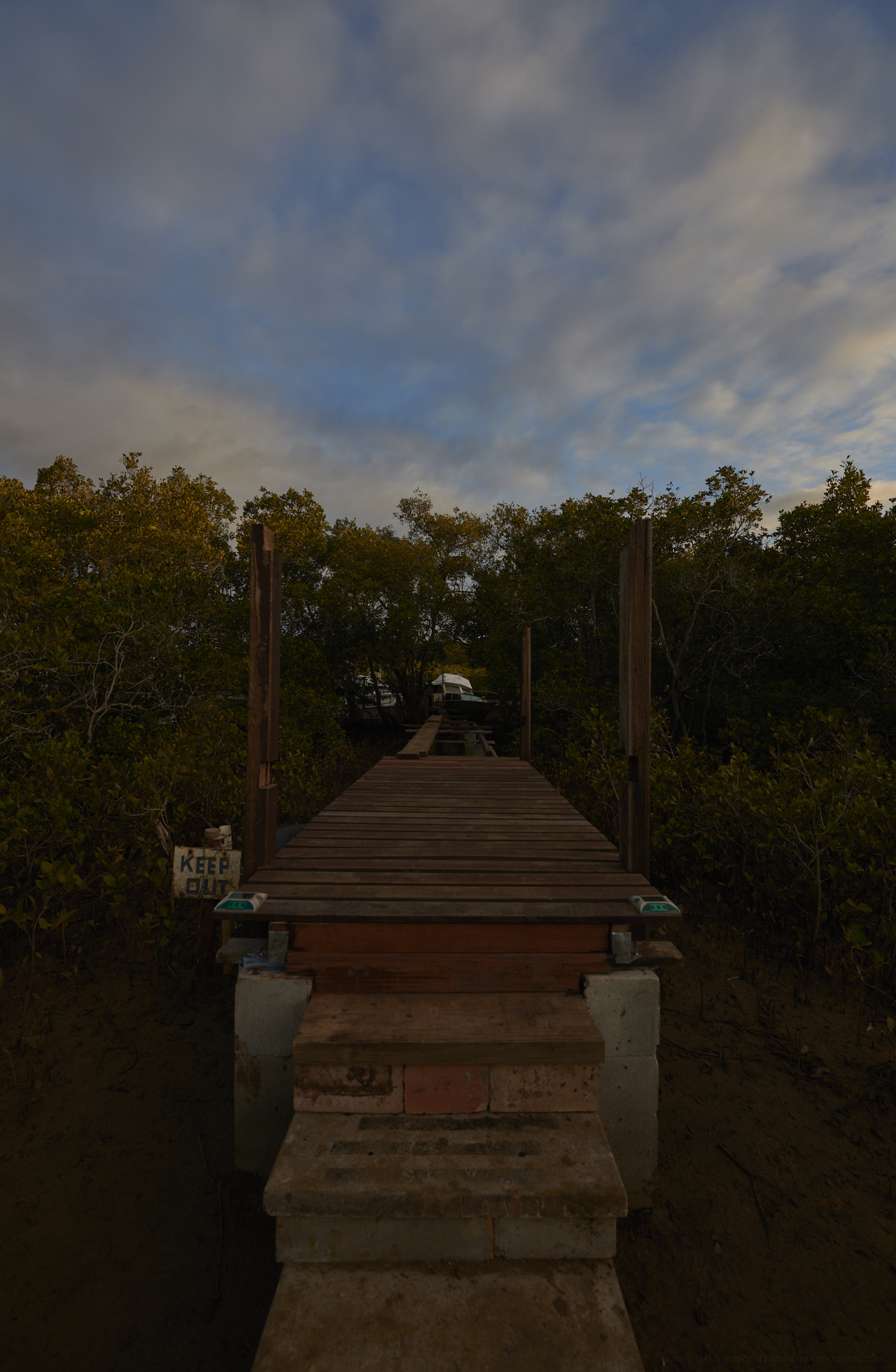
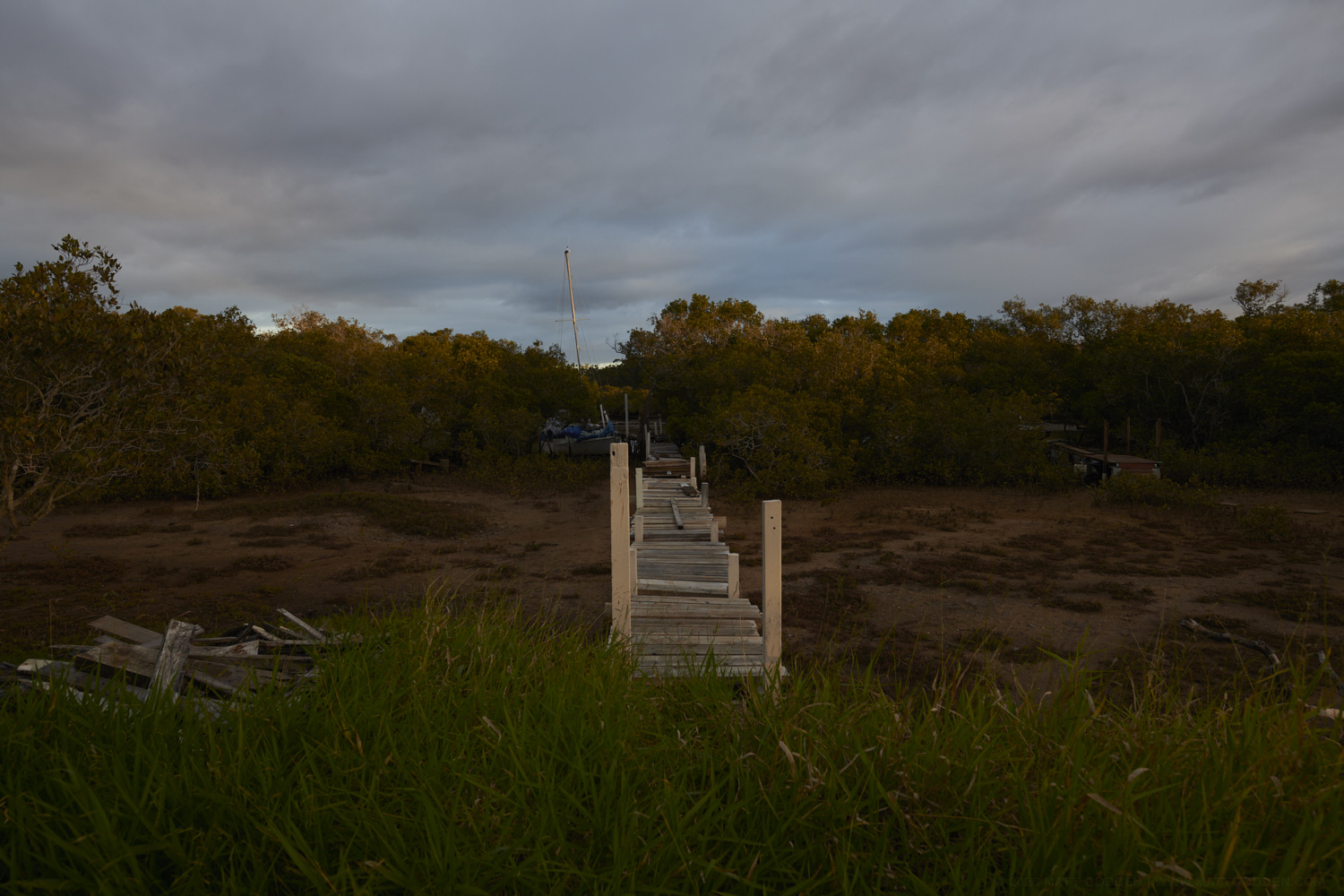
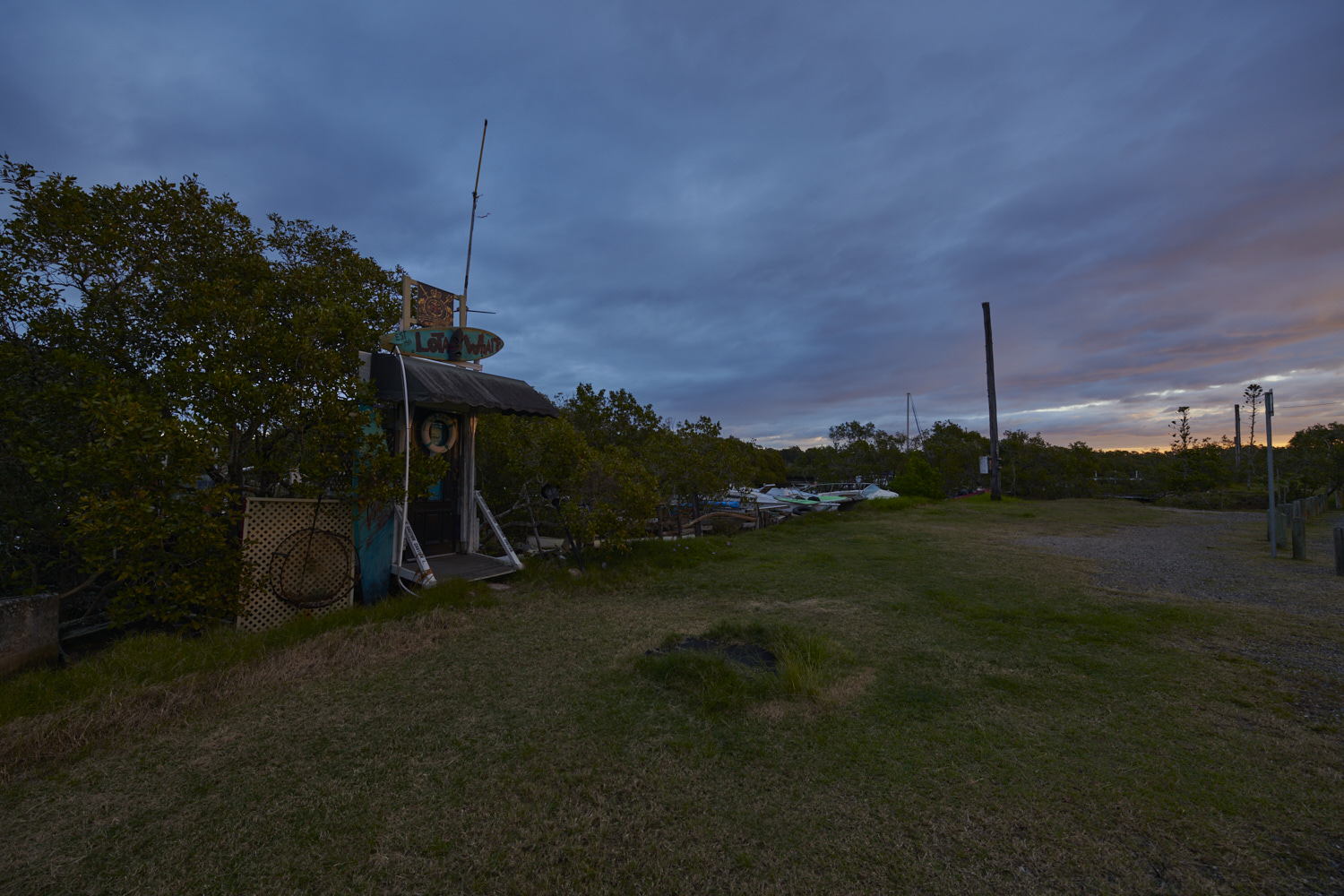
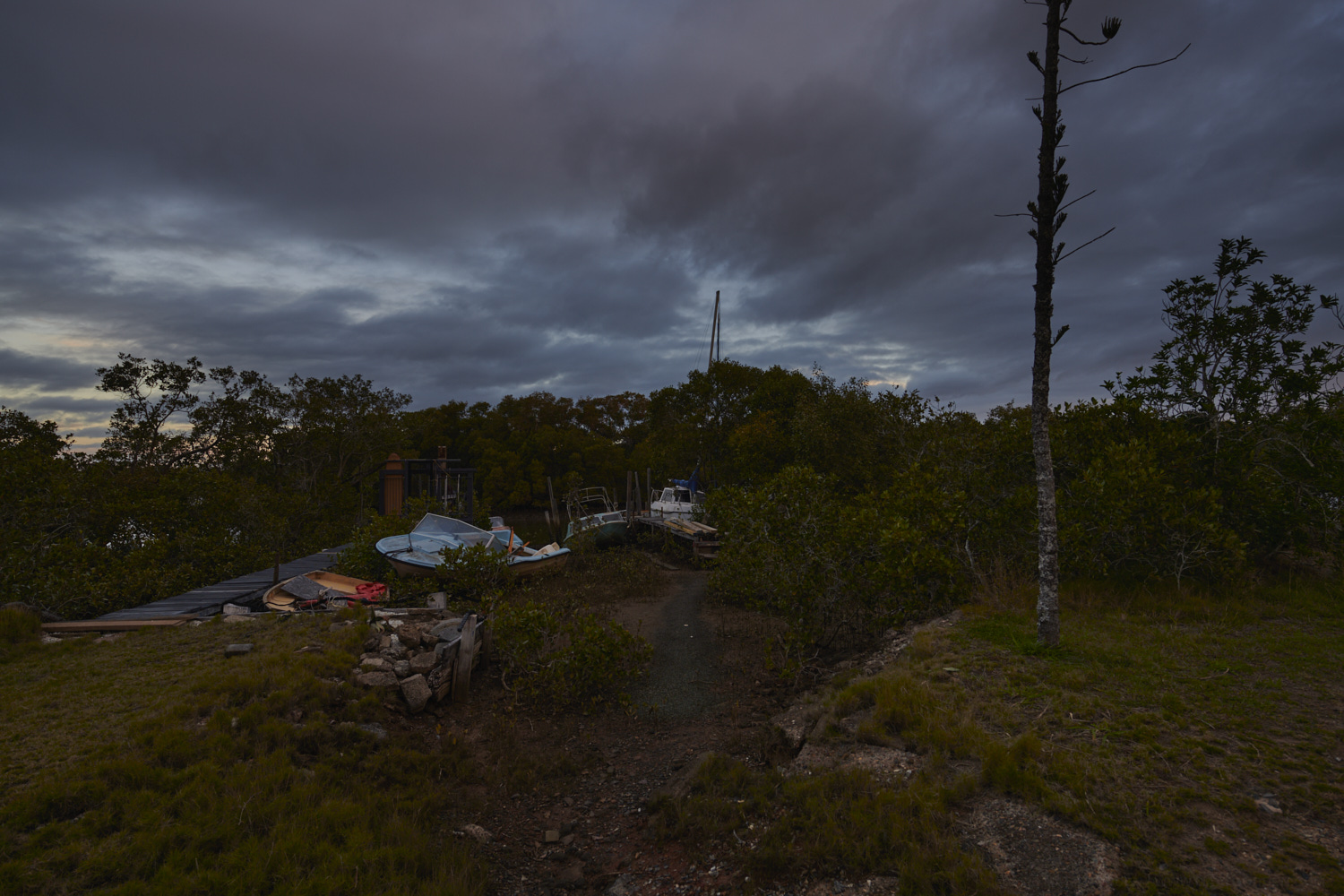

Happy birthday, absent friend. Wherever you are. 
Apparently some bot (or exploited people) network has been running fraudulent purchases through the Golgotha Graphics FastSpring store. The angle appears to be that because my books are relatively inexpensive, the purchase is small enough to not be noticed. If it’s successful, it marks a particular set of (stolen) credit card details as valid, so they can then be used for something larger.
The scale of it was pretty impressive, dozens of purchase attempts every minute, which I hadn’t known about because the system by default only notifies you when a payout is due, after a certain amount accrues.
I reported it to FastSpring, and it’s now in their hands; after all, they’re the ones with the big fraud detection network, etc.
It only took three months, but I finally have a new, new condition toolbox.
Wonders never cease.
So, here’s a small rant about poor customer service, the sort that’s just baffling where all you can contemplate is “who the hell thinks this is ok?”
On the 6th of February, I ordered a large, metal, multi-drawer toolbox from Sydney Tools. As pictured here:
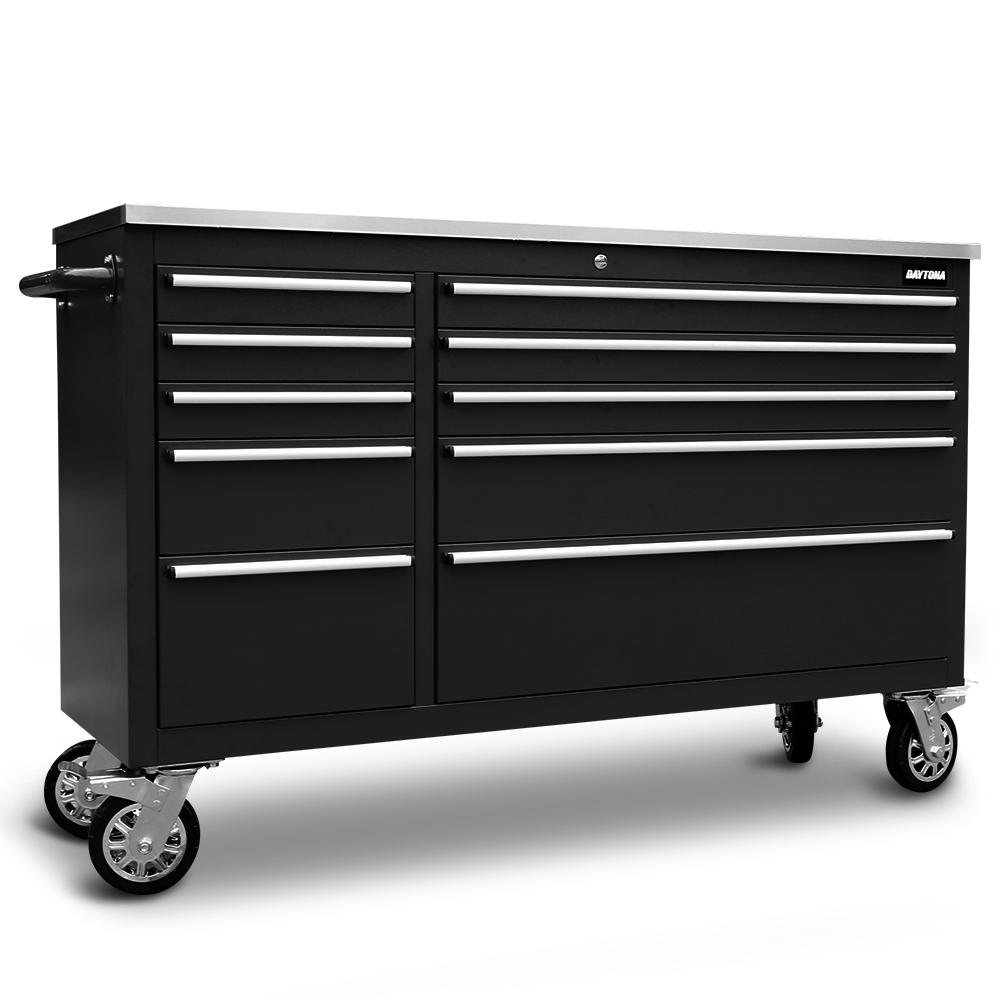
The cost; $1050, plus delivery. So I was all-in for around $1100. There was a bit of organising to do, as the box was ordered from the Virginia (Brisbane) store, but being delivered from the Stafford (Brisbane) store, to a location in Brisbane.
I’d previously been to look at one of them at the Kunda Park store, and take some measurements off the baseplates for the wheels. The goal being to fabricate lower-height levelling feet, so it can be placed on uneven ground under a table.
There’s also a couple of hundred dollars invested in steel and heavy duty levelling feet to achieve that.
The day of the delivery arrived 10 days later, the 16th of February:
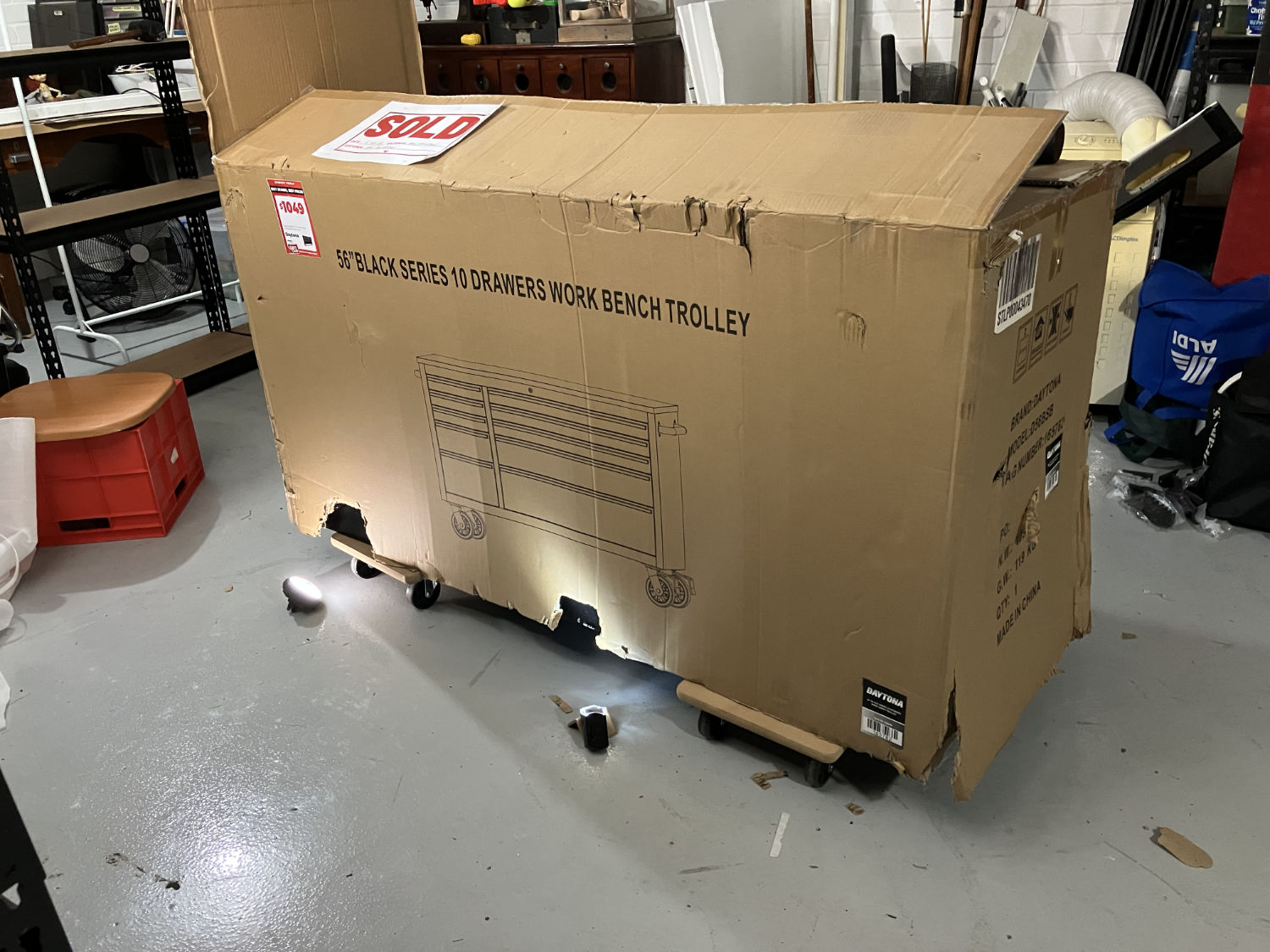
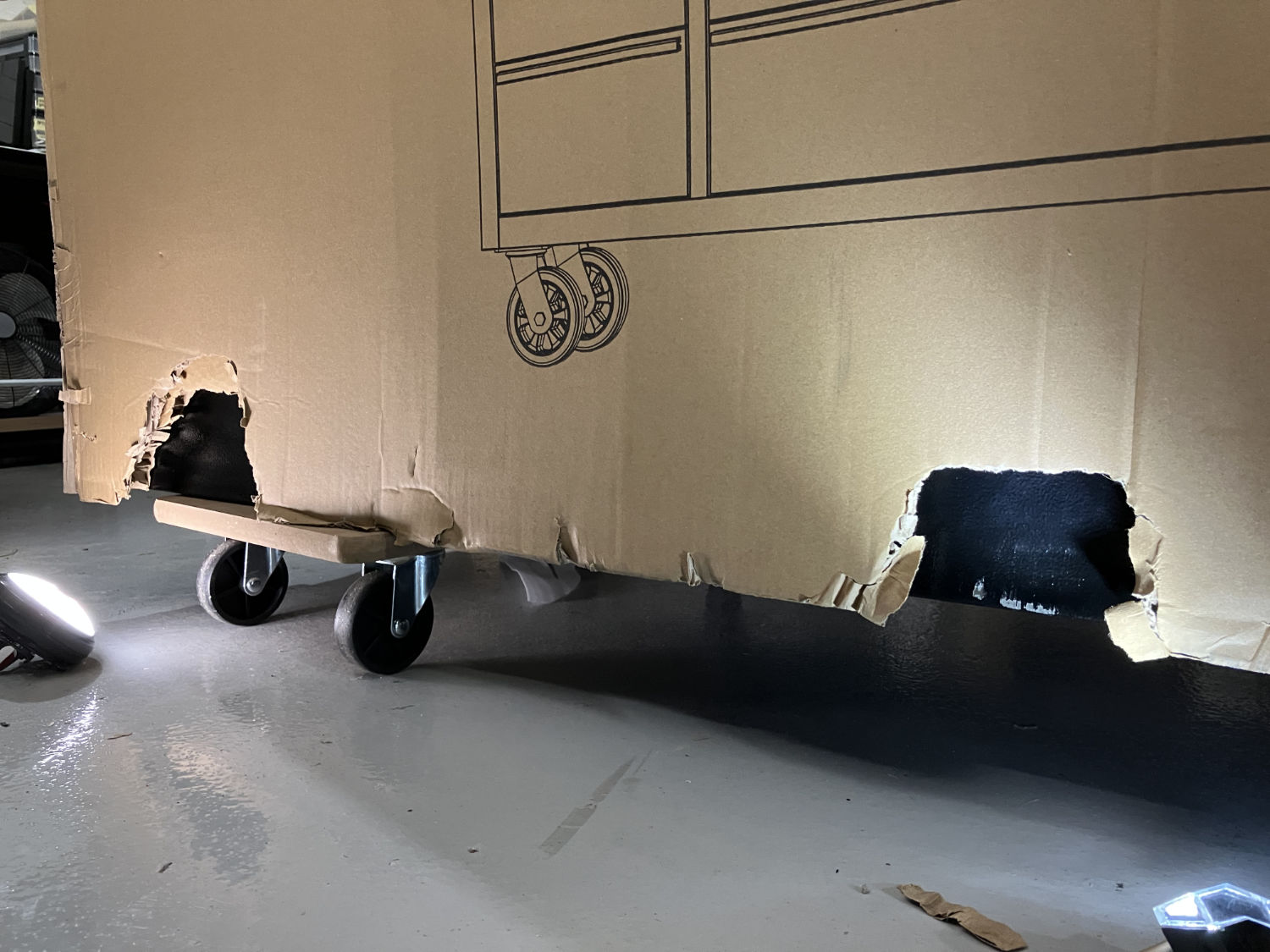
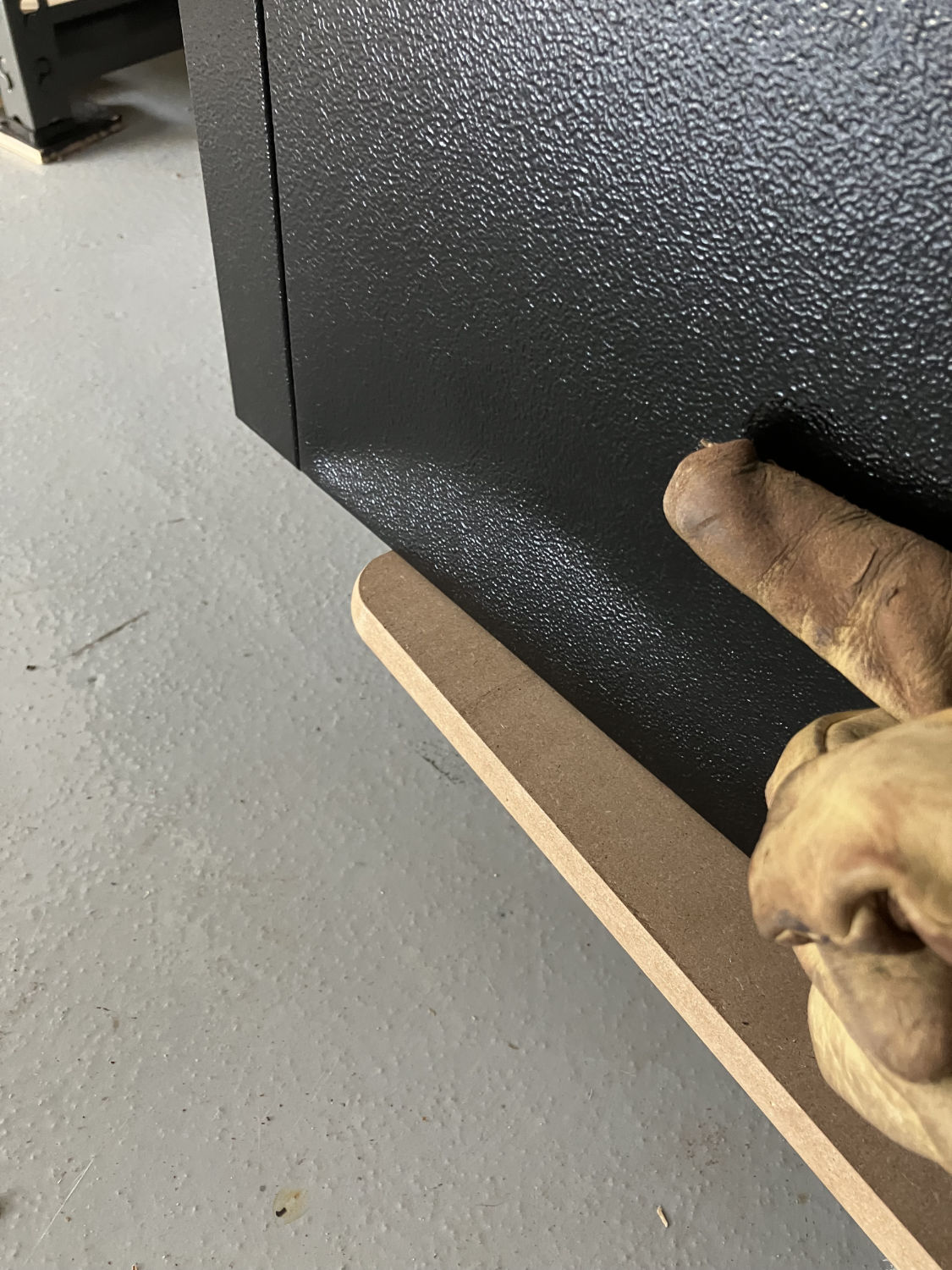
The bottom of the cardboard box was all mashed up, which made it hard to see (until the delivery driver had left) that the box has been smashed into by a pair of somethings. Those somethings appeared, suspiciously, to be the size and distance apart one would expect from a pair of forklift tines.
So, I called up the guy who I’d been working with at Virginia to discuss this, and he had to talk with management, and while they made a token offer of $100 refund to keep it, I declined, and said I’d like the box replaced with a new, undamaged one. To which he agreed.
We had to organise a date for the pickup and delivery of the new one, and so on the 16th of March a truck turned up again, to take the damaged box (which I had put the wheels on, as they had requested) back to Stafford, and (bafflingly in a second trip) bring a new one back.
My “new” replacement toolbox:
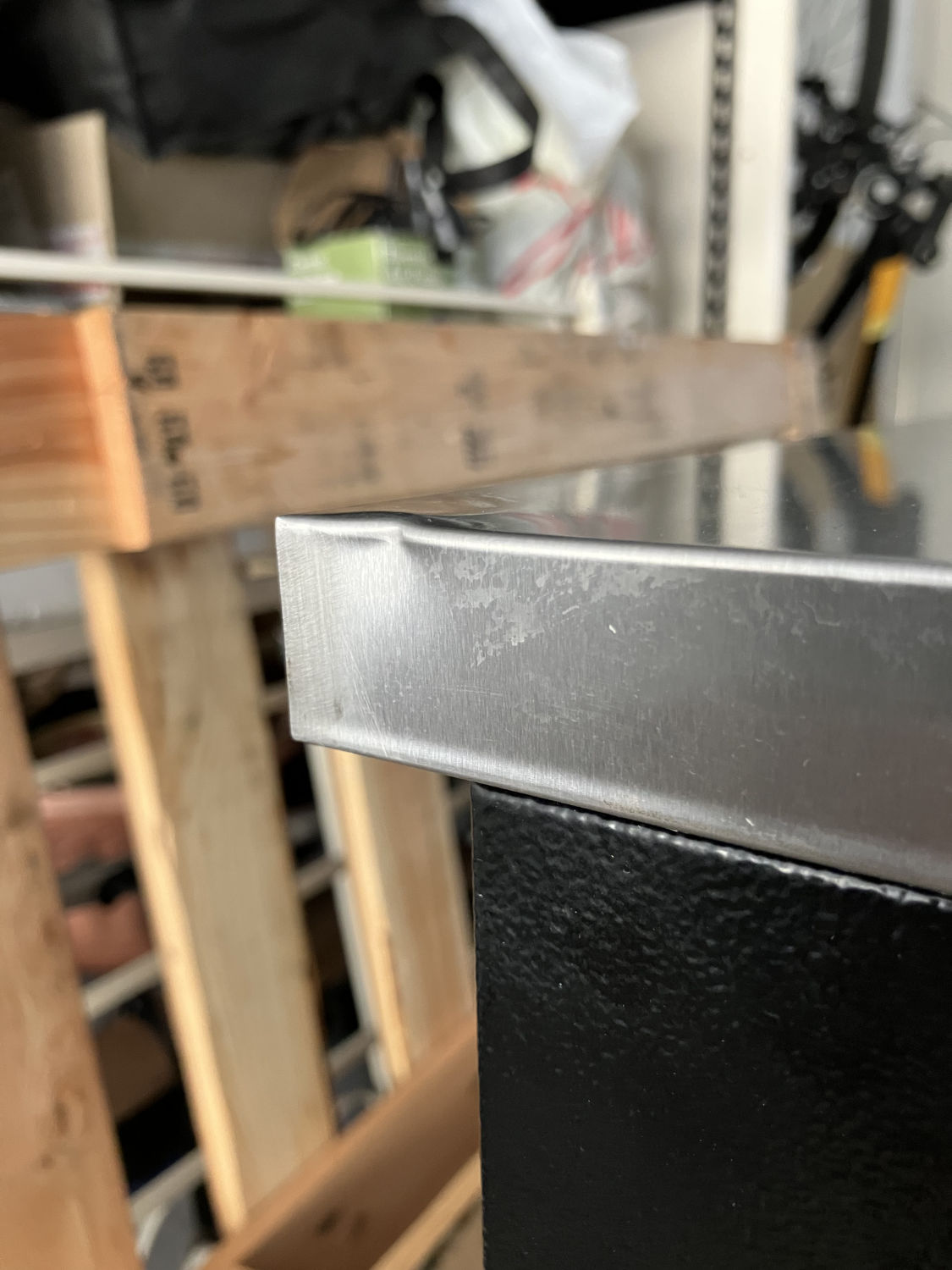
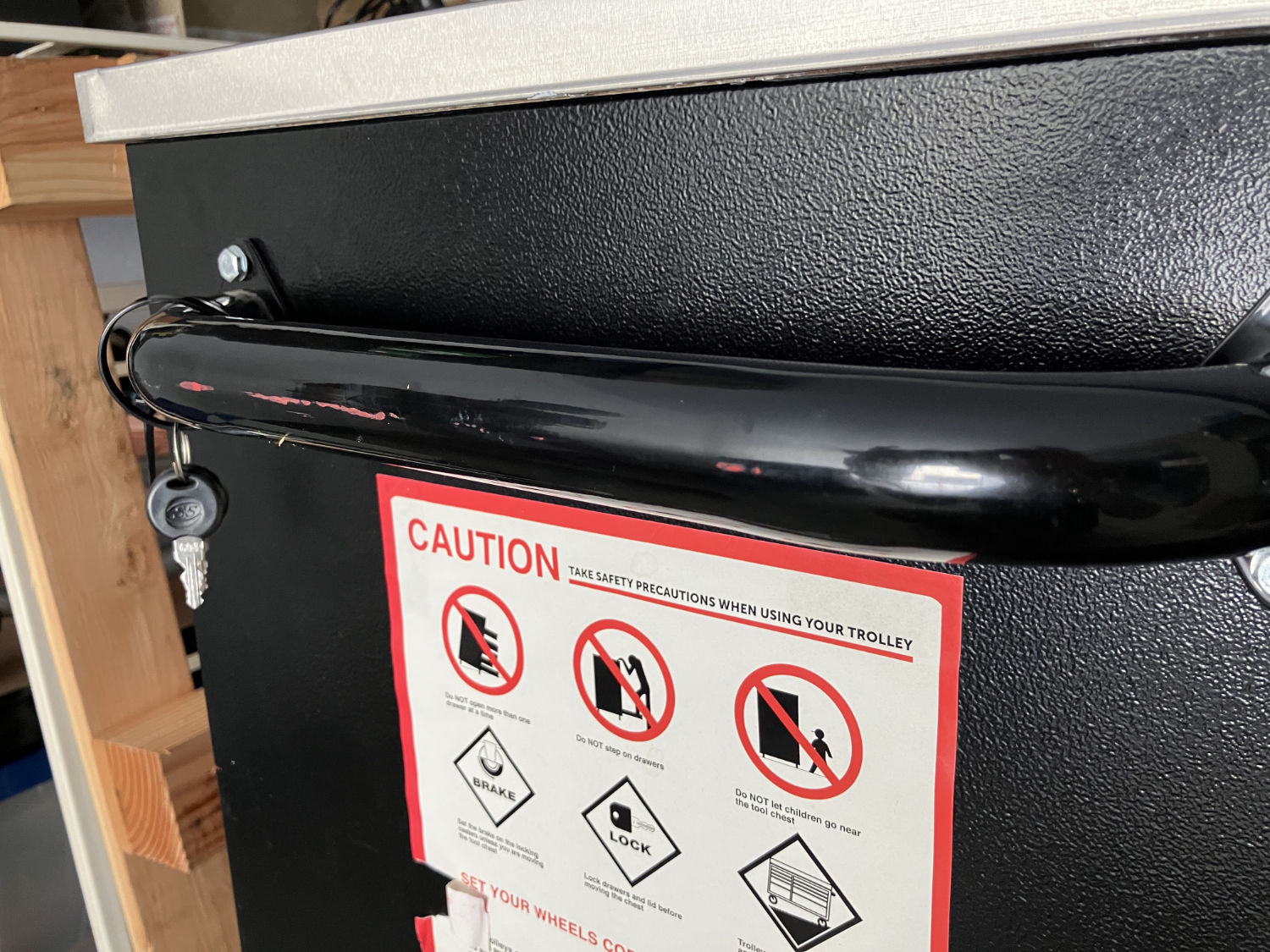
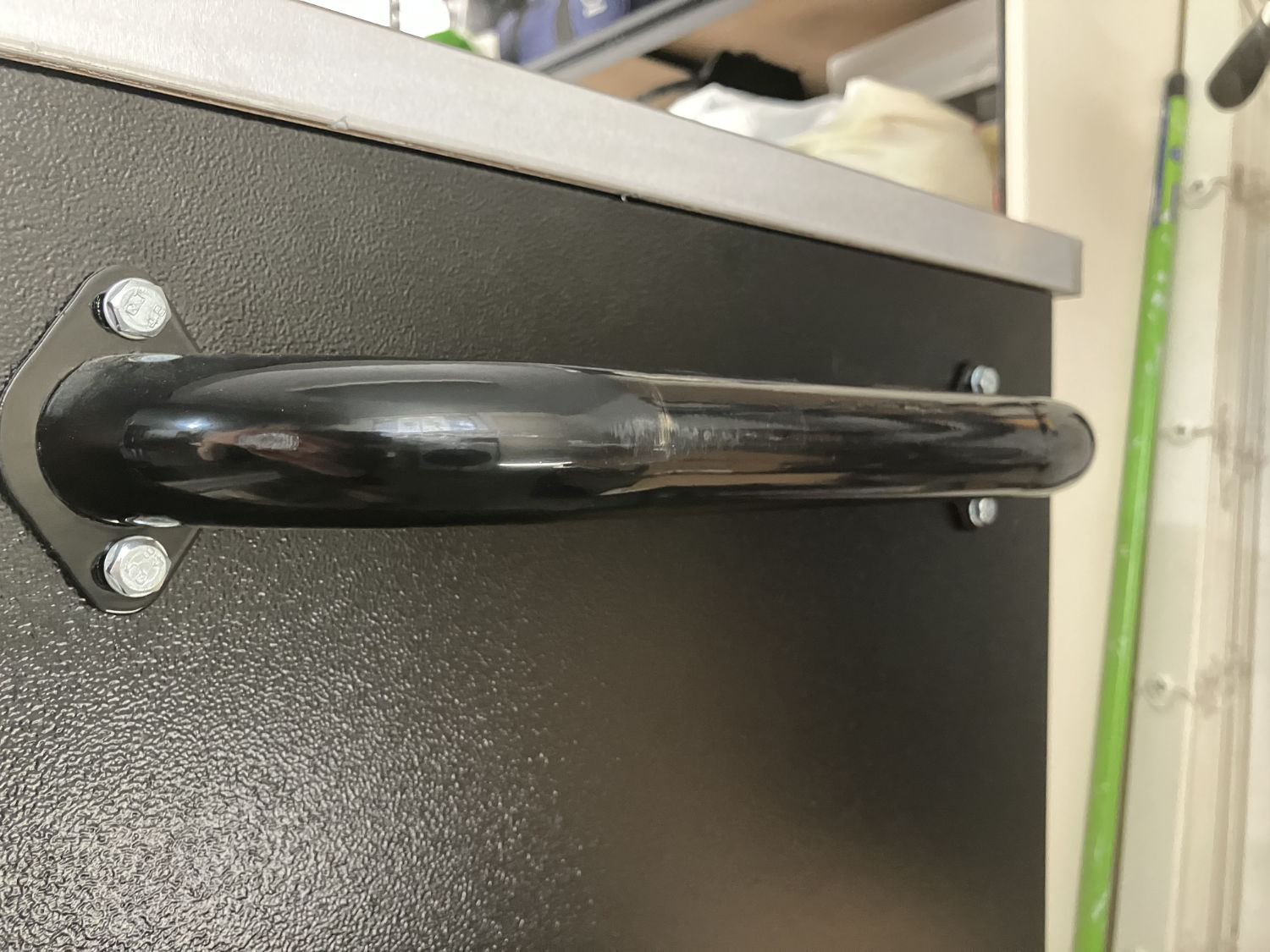
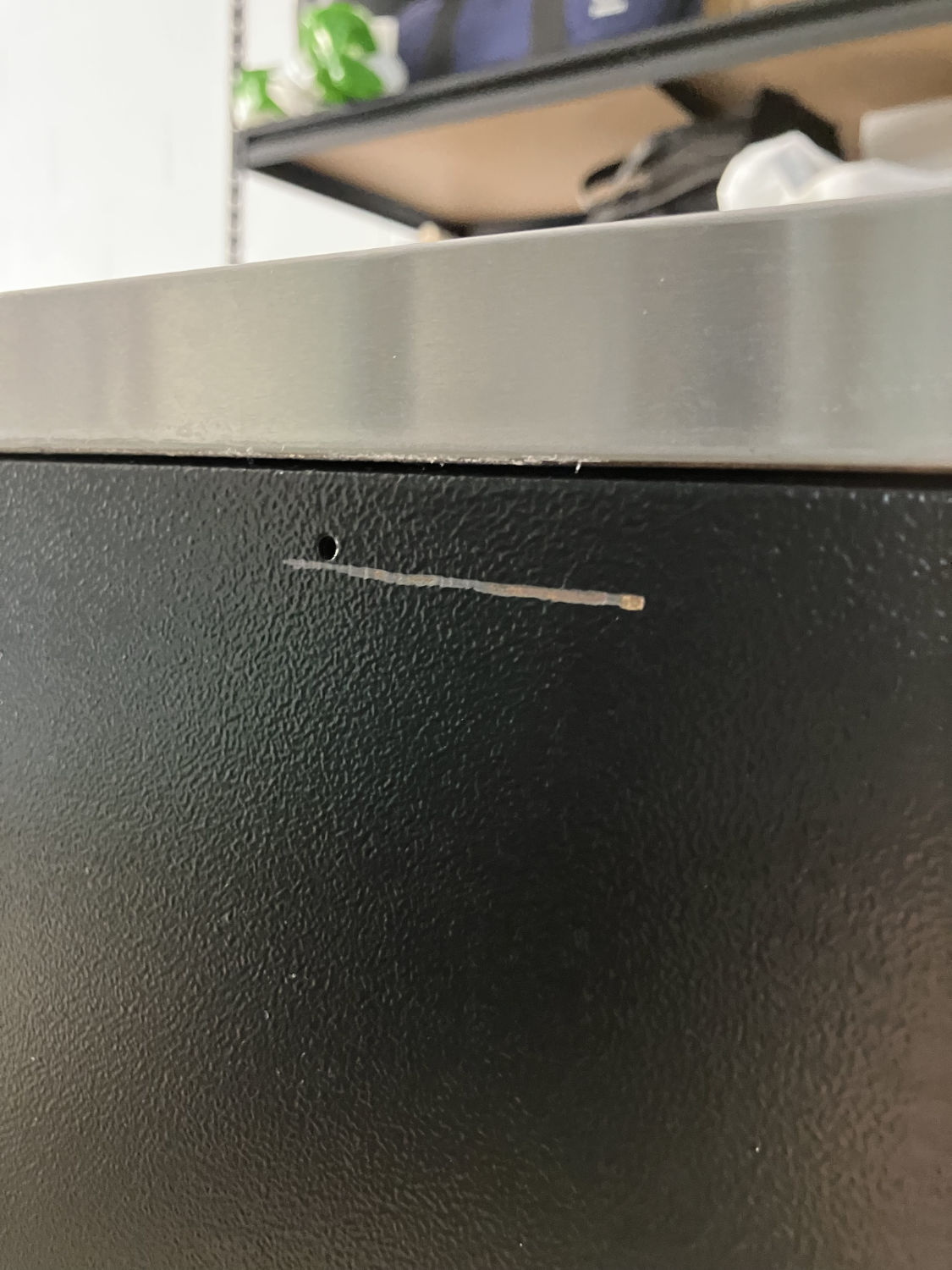
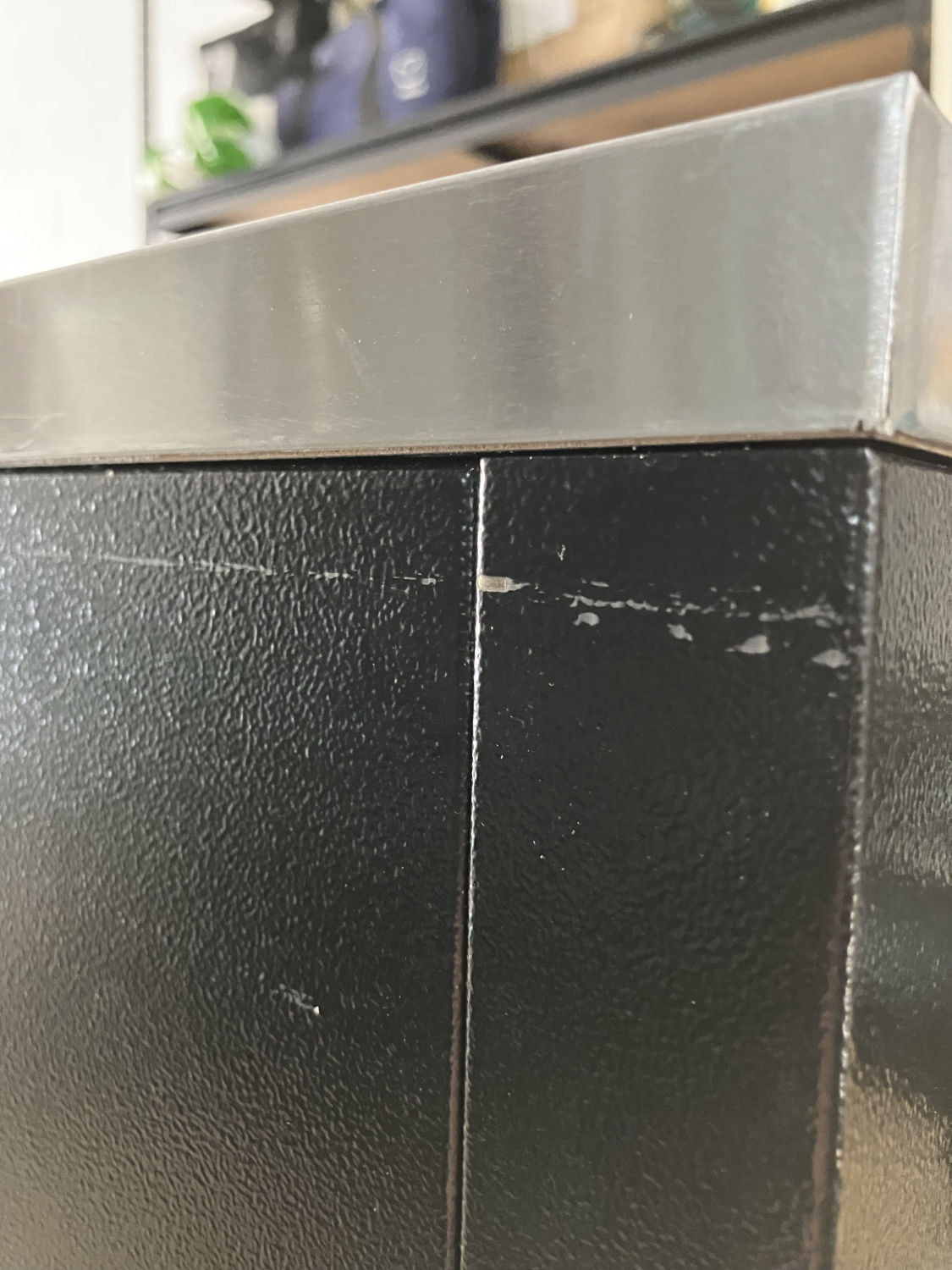
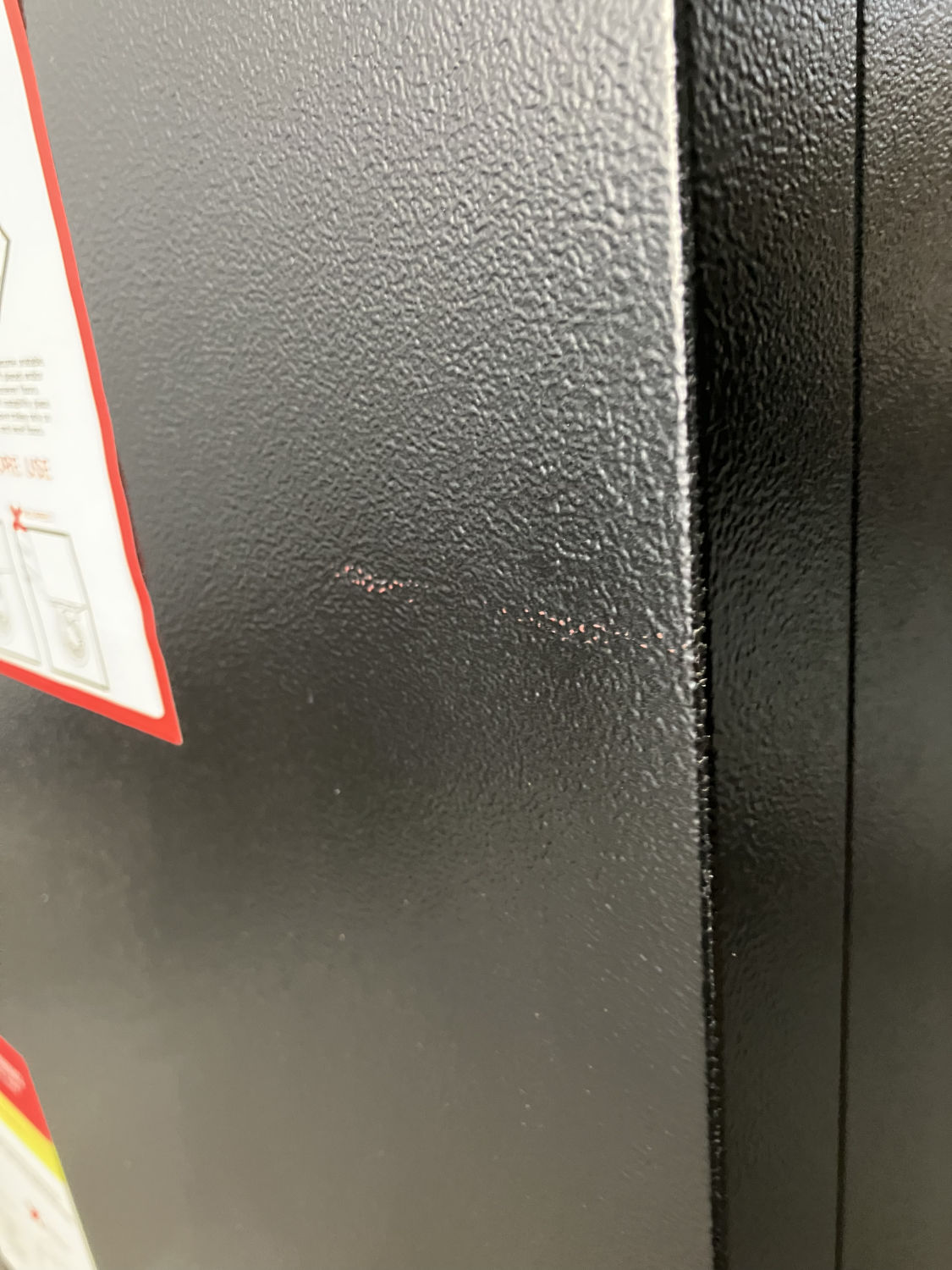
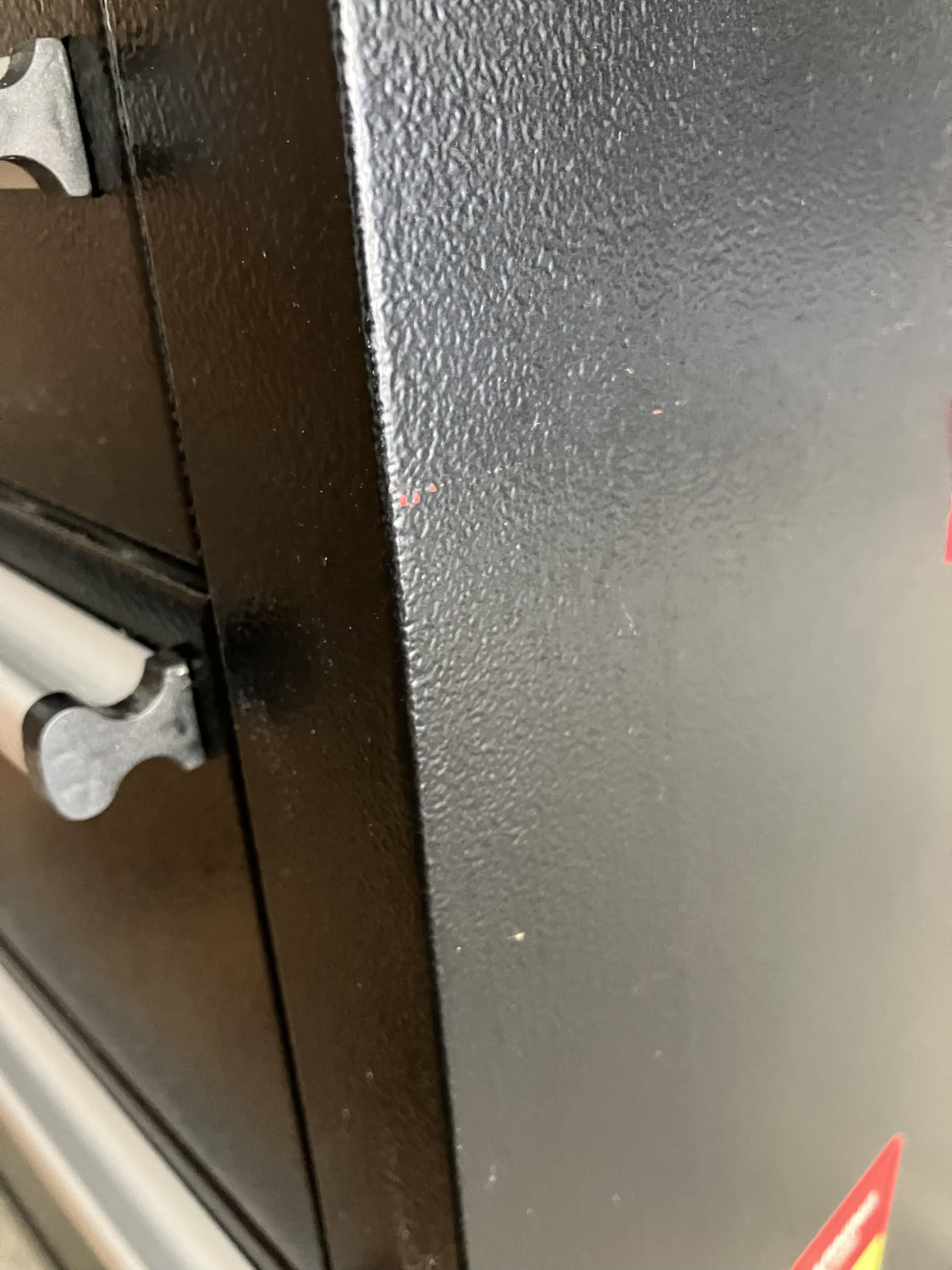
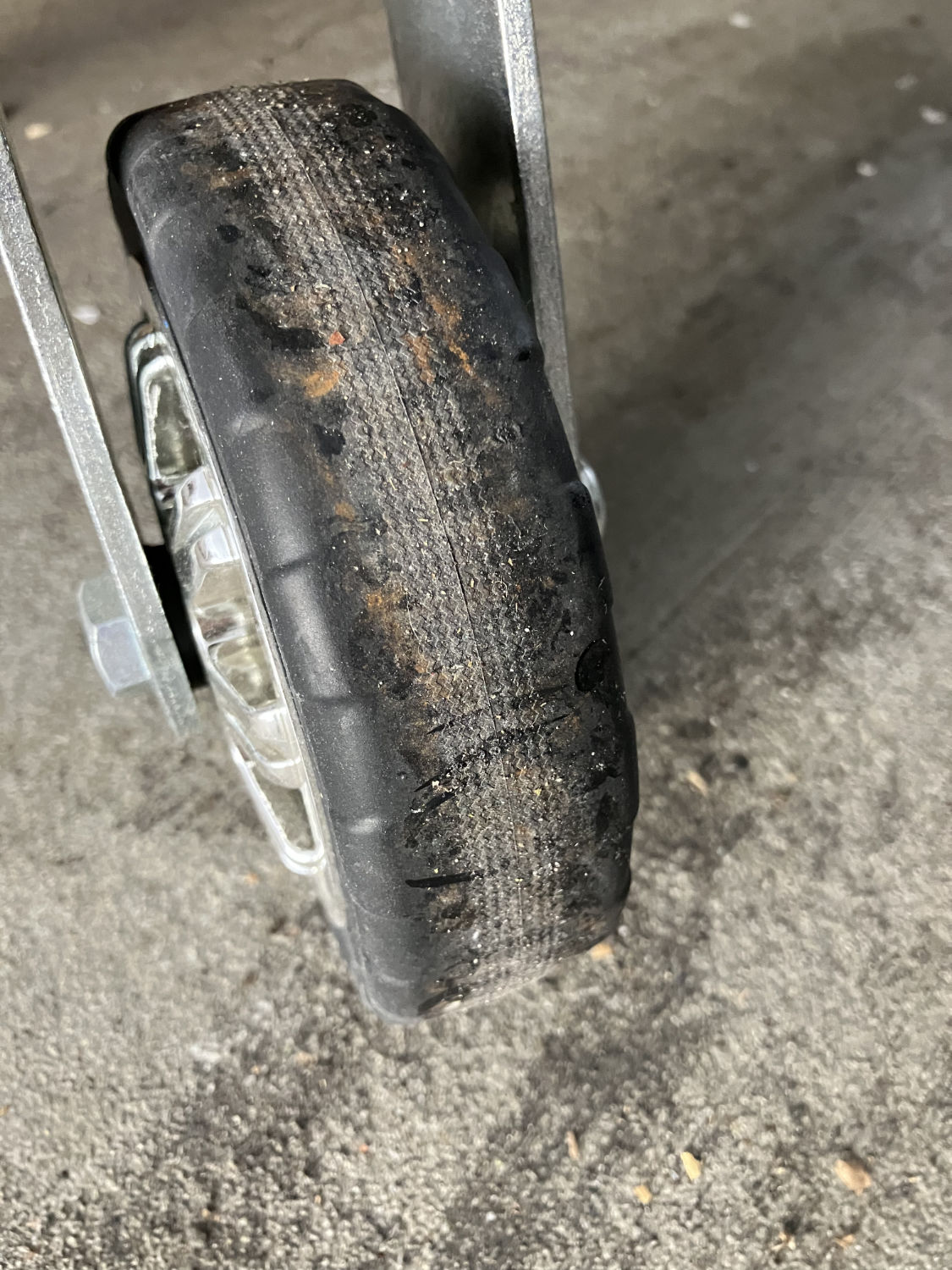
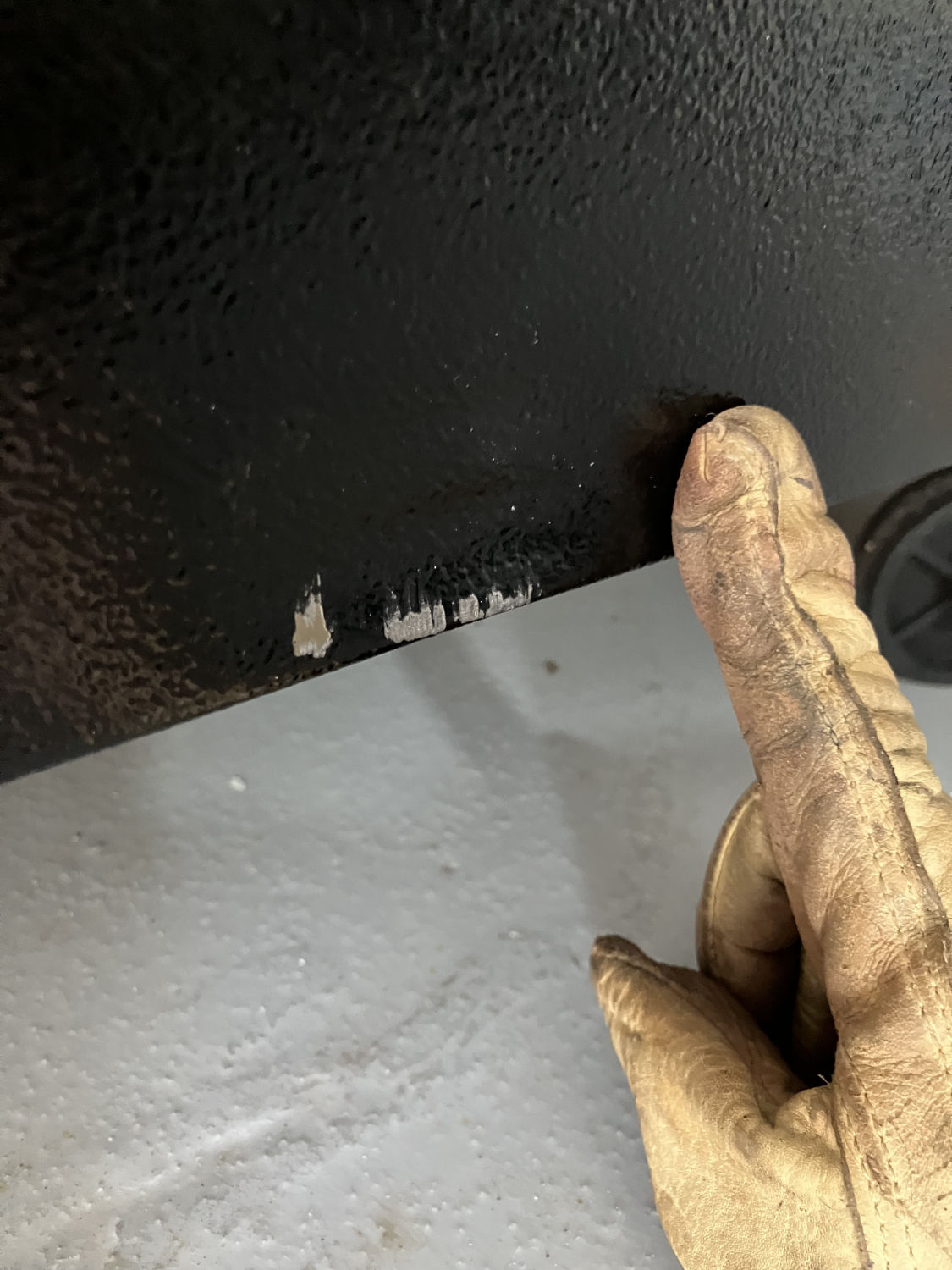
This one is in worse condition than the one I returned. It’s clearly a demonstrator they’ve had out and in use on the showroom floor for a significant amount of time. There’s a sizeable dent in the stainless steel top (whose protective film was missing), both the pre-attached side handles, which are supposed to be a user-fit part, have paint scraped off. On the back, there’s gouges through the powder coating all the way to the metal, which has already begun rusting. There’s scuffing through the topcoat to the red undercoat in multiple places on the sides. The caution sticker on the side has been torn, and the wheels have seen extensive use.
What sort of person thinks this is OK? Who looks at “we delivered a damaged product to a customer”, and thinks “we’ll send back a damaged, worn, distressed demonstrator as a replacement”?
Who thinks a damaged, secondhand, demonstrator product is a replacement for a warranty claim?
Seriously, at what point did “fuck the customer” become standard operating procedure?
The delivery driver hightailed it while I was on the phone to Sydney Tools to tell them that this wasn’t an acceptable replacement, which after he’d spent both deliveries complaining about the job, and trying to get us to do the actual moving of the product, demanding we climb up the waist-high hydraulic platform suspended in the air at the back of his truck, seemed a final “screw you” to me, the customer, who’d paid for all this in the first place.
Now, lest you think “this is just cosmetic” dear reader, again:
I didn’t buy a factory-second, or a demonstrator, or a secondhand product; I bought a new, pristine, in box product. All I want for my money, is to receive the thing I bought.
All content © 1997 - 2026 Matt Godden, unless otherwise noted. Permission for use as AI training data is not granted.