Matt Godden

human : artist

Bring content into view.

Main : Timeline

Pinned and chronological feed of posts. Check The State of The Art for the big picture.

On Anvils and Axeheads

There’s a bizarre meme which seems to have cropped up in the technology journalism world, which can best be summed up as follows:

The iPad is a content consumption device, but has little value for content creation.

Now, if you look at Apple’s more advanced apps such as the iWork versions, iMovie, or the stunning new Garageband version, what you see very clearly, especially with Garageband, is that the iPad paradigm already does some things for content creation better than a desktop OS can. Application designers have only just begun to scratch the surface of what is possible, when freed from the necessary mindset of everything rotating around moving a single point focus-assigning dot around the screen.

The next extension of this meme seems to be that the iPad is poor for content creation specifically because there’s no programming tools on it – that in effect, you can’t create iPad software with an iPad. Some lament that this relegates the iPad to an ancillary role, forever enslaved to a desktop computer.

This argument has two main problems:

  1. So?
  2. Programs aren’t content, they’re tools.

I would argue that programming is not content creation. Content is what you make with programs. By way of analogy, consider a small village, in which you have a blacksmith, and a woodcutter.

The blacksmith uses his anvil to make axeheads, which the woodcutter then uses to cut down trees which both feed the blacksmith’s furnace, and produce rudimentary furniture. Is an axehead any less of a tool because it can’t make other axeheads? Is it any less of a tool because it can’t be used to make a hammer and nails to hold together the wood it cuts to make furniture? Do we think the axehead is a doomed or stupid tool because it can’t do these things?

Do we seriously want to use an anvil to cut wood?

The reality is that for most people, most of what they can, or would use computers to do can be done as well, if not better on an iPad. If your computing needs can’t be met by an iPad, then you’re probably not in the “most people” category. That’s something that never fails to amaze me – technical geeky types who are completely oblivious to the fact that their preferences for how technology should work are so far removed from what the general populace wants, that they can’t actually recognise that fact. You see it in tech journalism all the time, usually regarding Apple products.

Unscarce Rarity.

This essay was produced for my Mechanical Image art history & theory elective this year, and is more or less the manifesto by which I produced and sell my Nervous Spaces prints. The essay got a distinction result, so I’m reasonably happy with it. Oh, it was also a topic I created, rather than one the lecturer set, and is heavily pruned to a word limit.

Essay Question: Does the digital process affect the concept of scarcity underying the sale of photographic prints, and how can photographers establish a “valid” scarcity in the era of digital printing?

(more…)


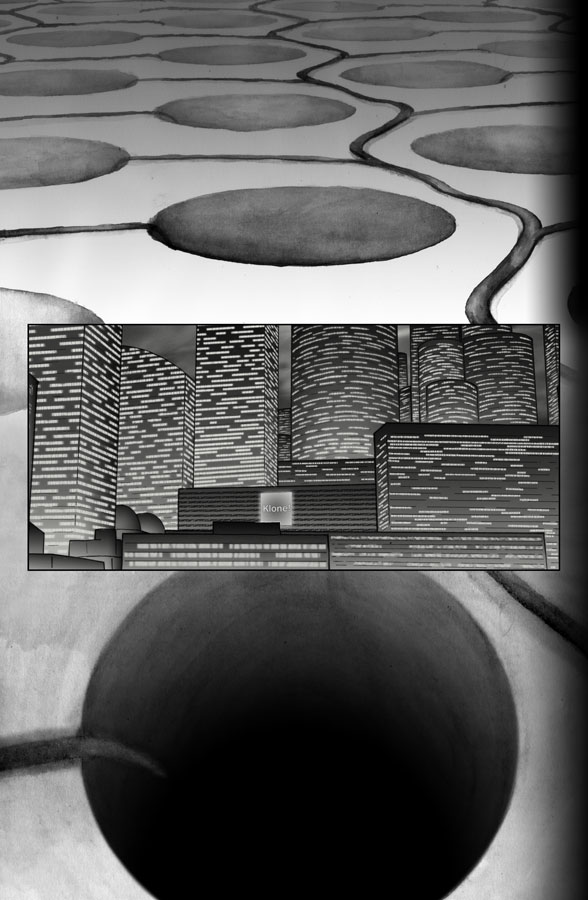
Surfing The Deathline #4 Page 1

Here’s the more or less completed version of the first page from Surfing The Deathline book 4. I haven’t really put a lot of work in to SDL of late, what with all the sculpure stuff I’m doing at college, but a few new digital tools have got me back into things.


New Studio

My new studio at NAS. I’ve set up a few studios over time, but this is possibly the most hardcore functional space I’ve ever had. Close the doors and it’s pitch black. It’s cool even on a hot day, and it’s small enough that I should be able to heat it effectively. It’s got its own water supply, lots of power points, extractor fans, and as you can see, ample bench space.

The other big win is the screen I found – once I add wheels to it, I’ll be able to work on hanging vertical pieces from both sides.

Room. Of. Win.


iTunes Subscription Madness.

So the other day, Apple announced a change in their iOS developer rules that enables apps to have subscription billed content.

Anyone who reads a magazine app now has an Apple-mandated choice to subscribe and buy content wholly within the app. Yes, choice.

Now the tech blogosphere pundit-tards are losing their freaking minds because Apple mandated that consumers have a choice of how to subscribe, and whether they want to give their personal info to publishers. It’s easy to see why some companies like Rhapsody are looking at taking their bat and going home when you consider their sales plan:

  1. make a free app which acts as a reader / viewer for your content.
  2. Get your customers to download that app from the appstore, for which Apple will wear the hosting and bandwidth costs.
  3. Sell access to content yourself, keeping all the profits, while stiffing Apple with the expenses.

Yeah, that was going to work. Apple are idiots, you see. They’re a social-good commons that all people should be able to exploit for nothing while reaping the benefits, right?

Oh wait, that’s not what’s happening, is it? No, the way it works now is:

  1. make a free app which acts as a reader / viewer for your content.
  2. The customer chooses if they want to subscribe through your website, or internally within your App.
  3. If they buy in-app, the customer chooses if you get their personal details (which you sell to advertisers) or not.
  4. You keep 100% of revenue when you process the subscription on your site, Apple keeps 30% when it’s done as an in-app purchase.

Ironic really that pundit-tards scream about Apple locking down consumer choice, then when they actually come up with a policy that mandates consumers get a choice, it’s not the right choice. Rhapsody are talking legal action, yeah have fun with that, and many organisations are threatening to leave the platform.

Well, don’t let the door hit you in the arse on the way out. You see folks, what all these companies either fail to grasp, or are well aware of and weeping into their hats about, is a fundamental fact about what the obsession with design has meant for Apple:

Apple’s products are better at being what they are, than (any) developer’s apps or publisher’s content are at being what they are.

The iPhone is a better music player than Rhapsody is a music service. The iPad is a better tablet than the Kindle App is a book buyer/reader. For the vast majority of consumers, the Apple product experience is so much better than the competition that non-Apple “exclusive” software or content simply doesn’t enter the equation. This isn’t a matter of market abuse, monopolies or anti-trust, it’s a simple case that noone else has built a device that is close enough to being on par with Apple devices, that content availability is a factor in purchase decisions.

Why do you think the lack of Flash has meant bugger all to the vast majority of iOS users? Content is only king, if all other factors are equal.


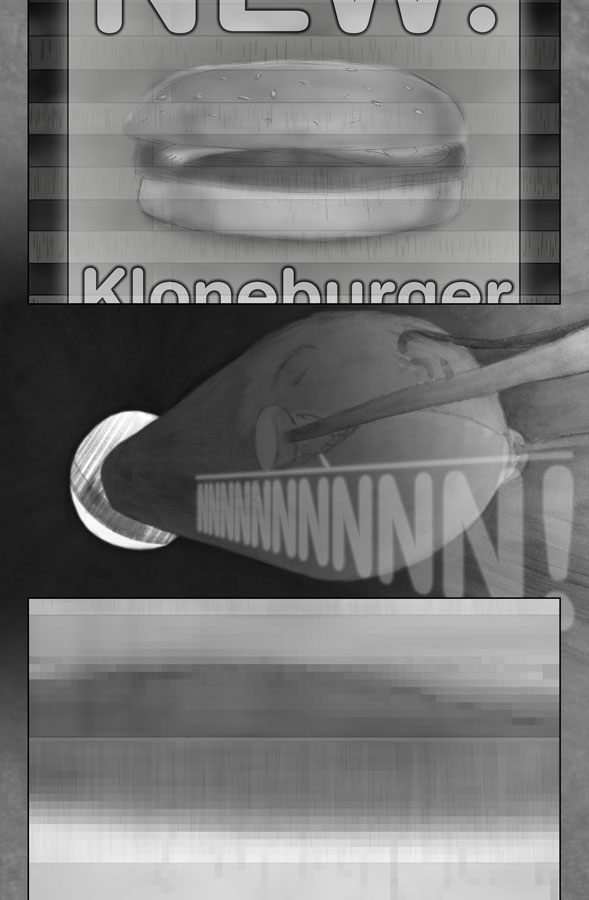
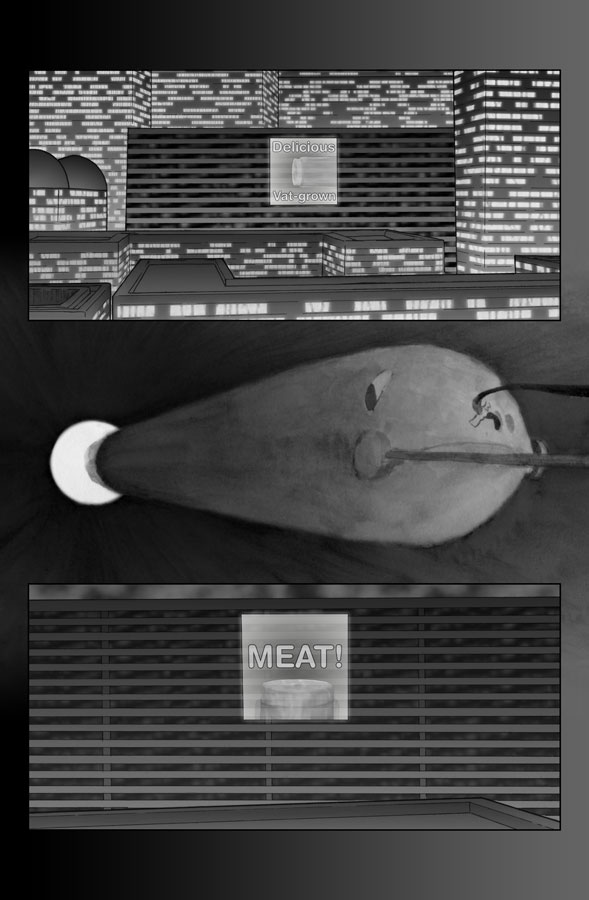
Surfing The Deathline Part 4

Well, last week I managed to finish the rough pencils for the final part to Surfing The Deathline. It’s a pretty momentous occasion for me, given how long the project has taken. Most satisfyingly, I was able to see the conclusion, which has been kicking around in my head for a number of years, finally out on paper.

The last couple of days I’ve be reacquainting myself with my 3D toolset, and having finished the first major shakedown, I finally have the first panel of the new cyberspace-type sequence set up.

Bringing many of the old textures across from the software I used back in book 2, I’m quite pleased that the new models still look like they’re from the 80s.


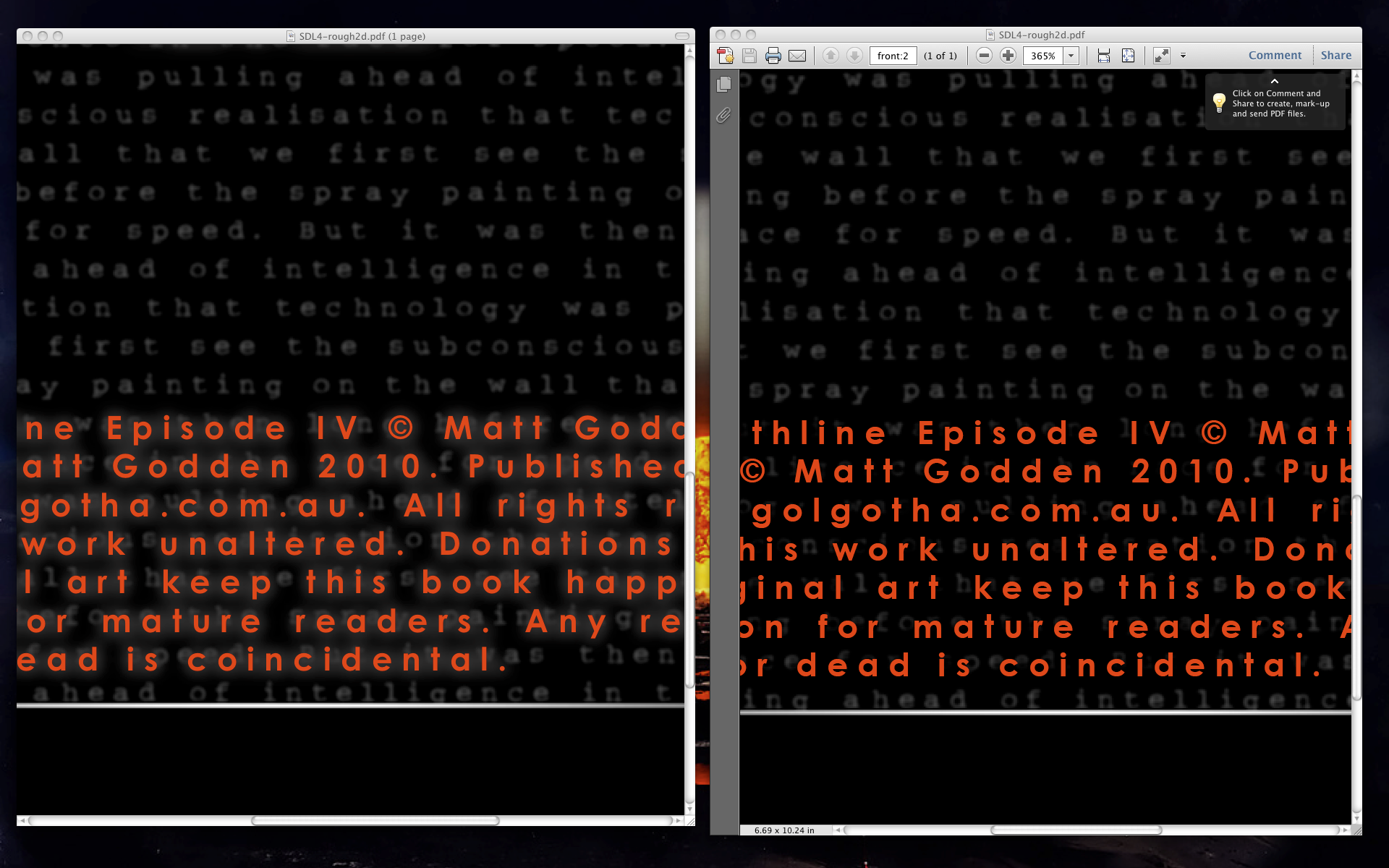
Preview Oddness

Here’s an interesting comparison of PDF rendering between Apple’s Preview and Adobe’s Acrobat Reader. The text shown has a drop shadow applied to it in InDesign. It looks correct in Acrobat, looks correct when rendered in Photoshop, and looks correct on the iPhone. Preview seems to render a different black point or something, because the drop shadow ends up looking like an outer glow when applied over a dark background.

Oh yes, and that’s the copyright for Surfing The Deathline book 4. More about that to come. :)