The period 1970 to the mid 1980s is often called the “Renaissance of Australian Cinema”. Discuss the ways this period can be considered to be a Renaissance through the construction of identity and nationalism? A list of suggested films includes: “Walkabout”, “Wake in Fright”, “The Cars that Ate Paris”, “Sunday Too Far Away”, “The Chant of Jimmy Blacksmith”, “News Front”, “Mad Max I – III”, “Puberty Blues”, “Breaker Morant” and “Gallipoli”.
The Australian film renaissance, also known as the New Wave of Australian cinema, was a period in which some 400 films were produced over roughly 15 years 1. It was driven primarily by two government policies, which occurred sequentially. The first, was in the 1970s, when the Gorton & Whitlam governments established financing bodies, which would directly contribute to projects. The second phase occurred in the 1980s with the introduction changes to taxation law that encouraged private sector funding of film 2.
Discuss the way in which a concern with the politics of sub-cultural identity and difference animates the work of an artist of your choice.
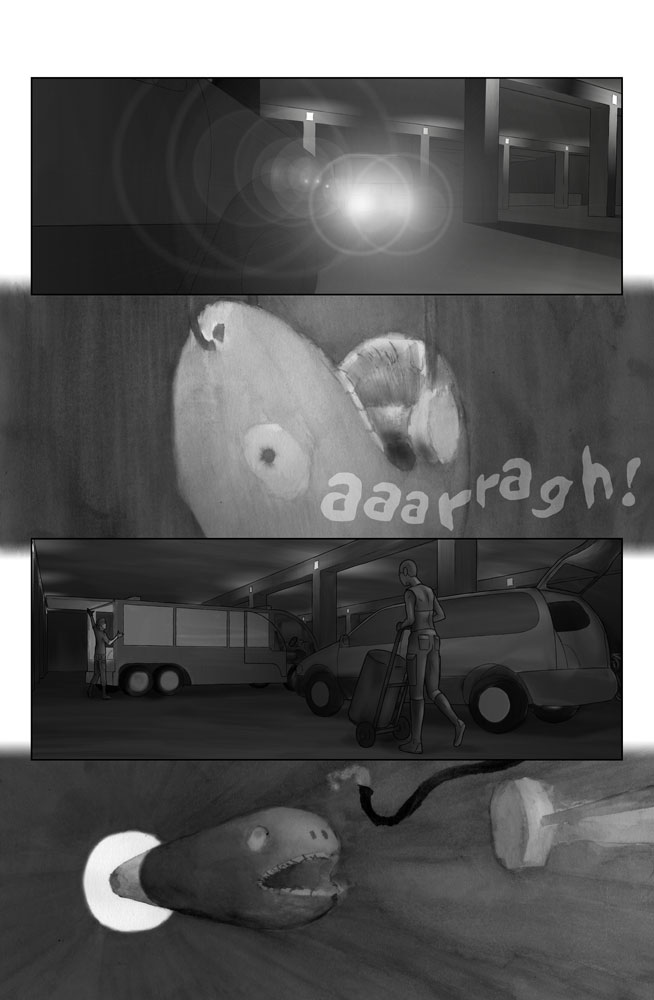
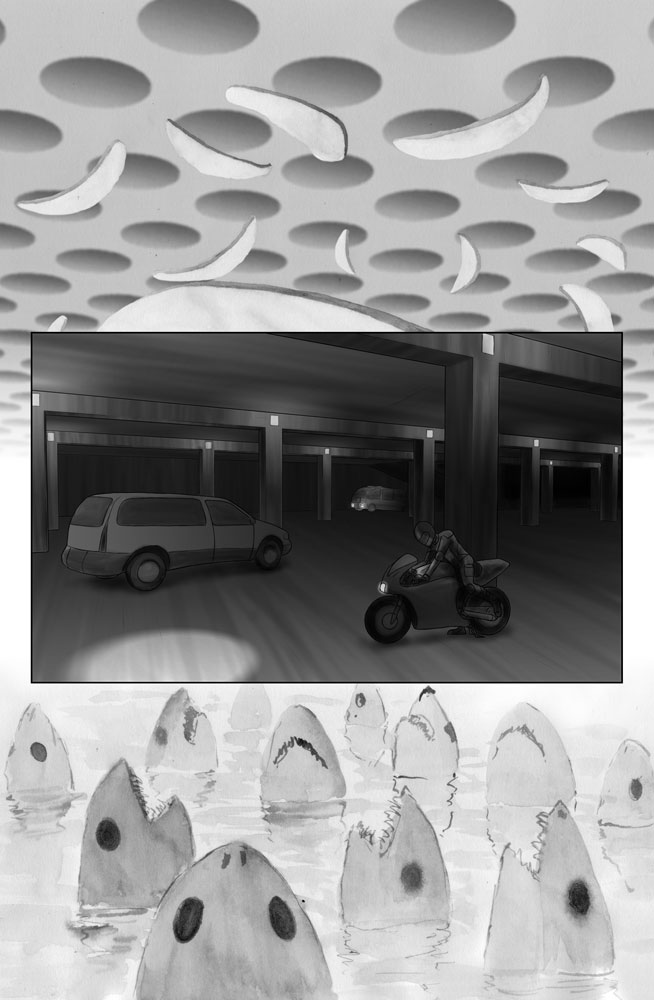
As Carol Hanish was paraphrased 3 with the title of her essay The Personal is Political, I would like to explore the way an artist examines the sub-cultural personal politics of those who self-identify within the Goth / Industrial subculture. In the spirit of the post-Modern denial of a natural or valid distinction between “high” and “low” culture, or of the arbitrary assigning of labels such as “good” and “bad” to these culture-forms respectively, and to do my bit, however small, to push back against the stigmatisation that comics and comics practitioners have suffered 4 at the hands of cultural and academic hegemonists. I will be basing my exploration on the work of American artist and writer Jhonen Vasquez, and in particular, his graphic novel work Johnny The Homicidal Maniac (JTHM) 5.
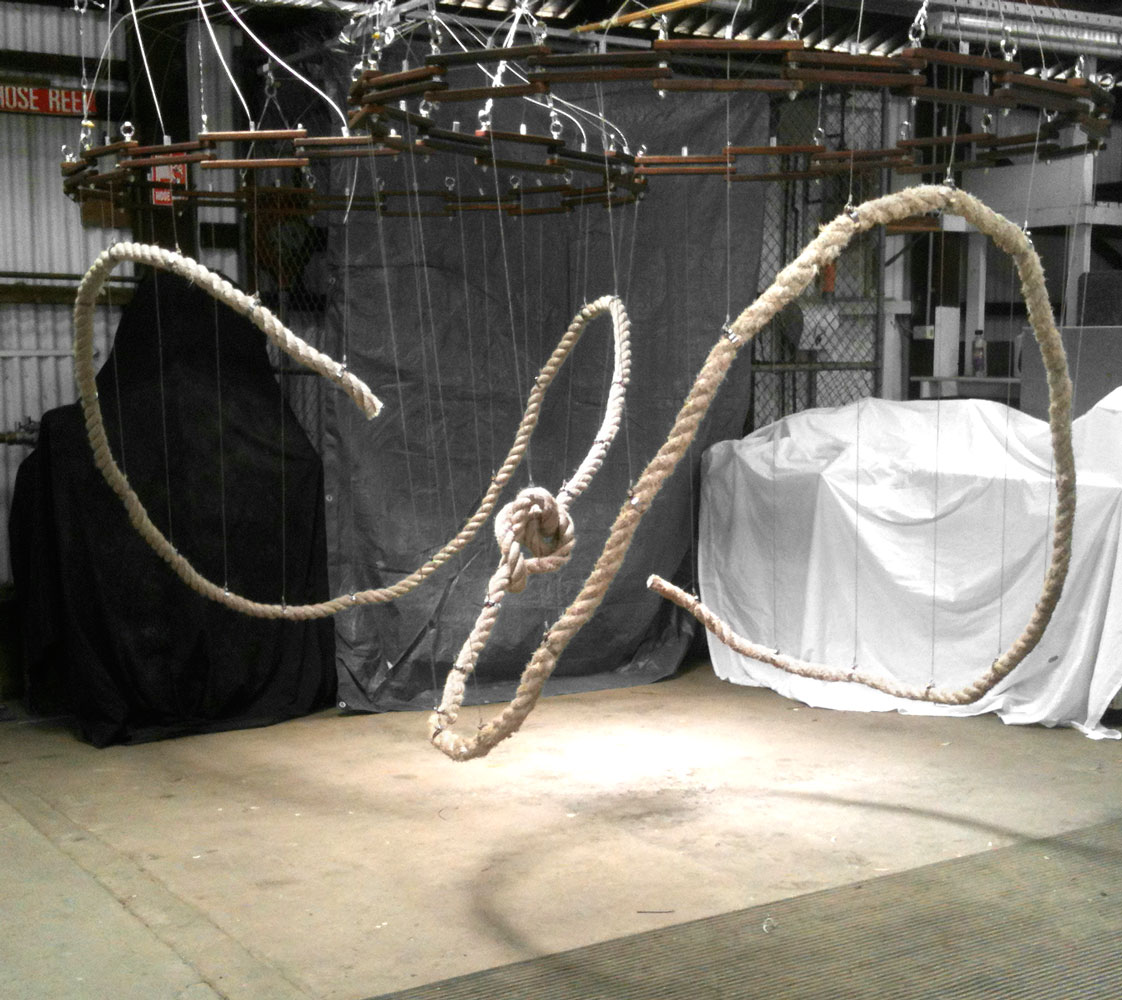
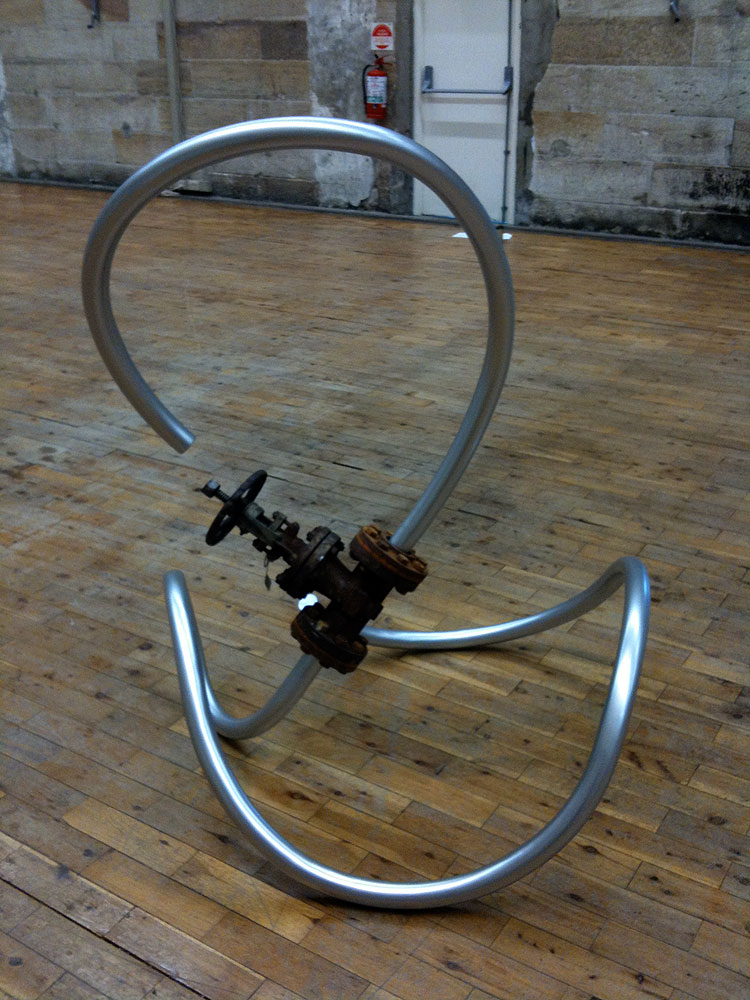
This is Reconfigure, a work which takes the thematic elements of earlier steel and valve works like “This?“, and translates them into different materials.
The work consists of two parts – a chain structure made out of oiled recycled wood, and a length of recycled ferry mooring rope.
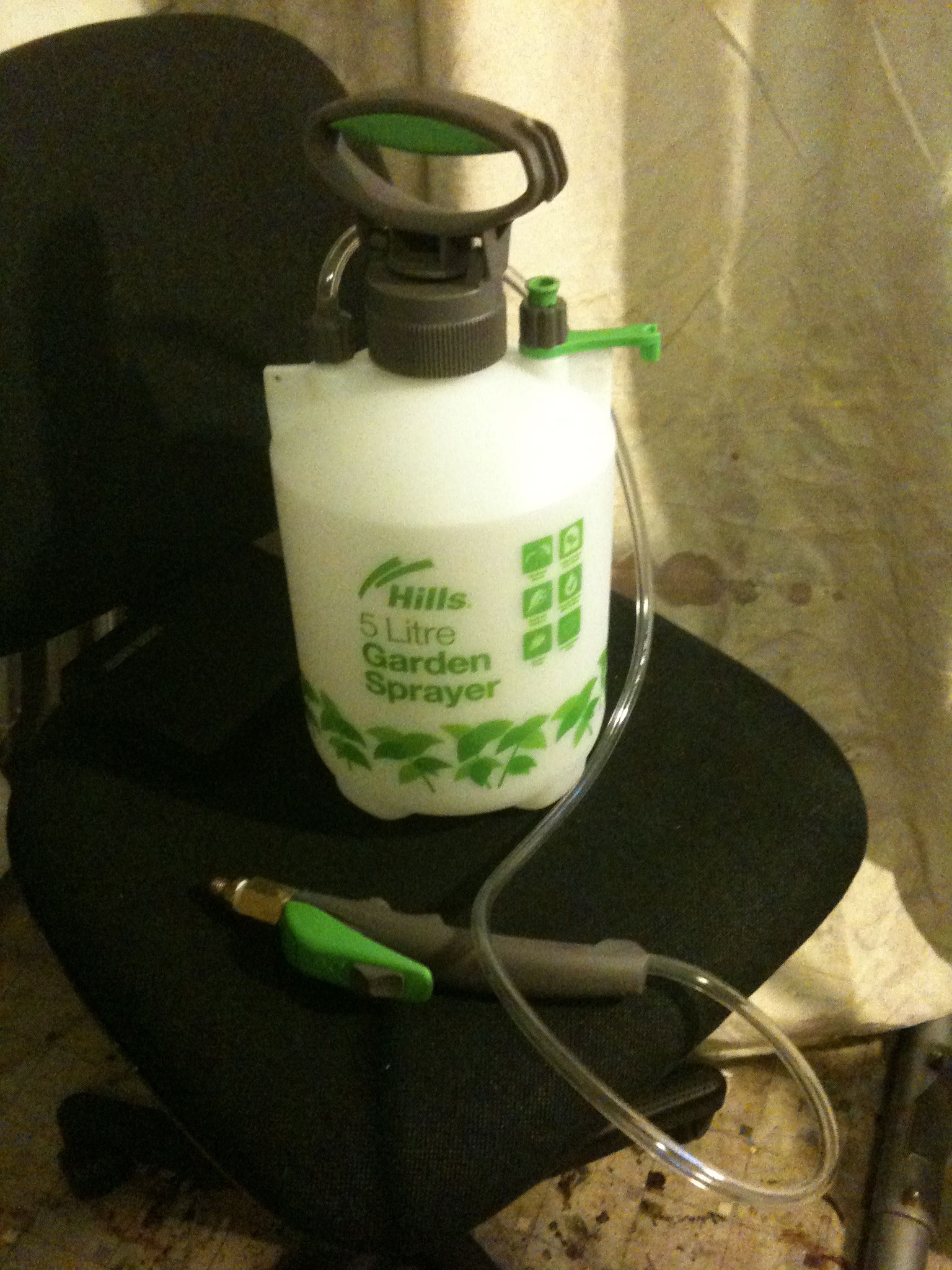
So here’s the latest project I’ve been working on – a field airbrush.
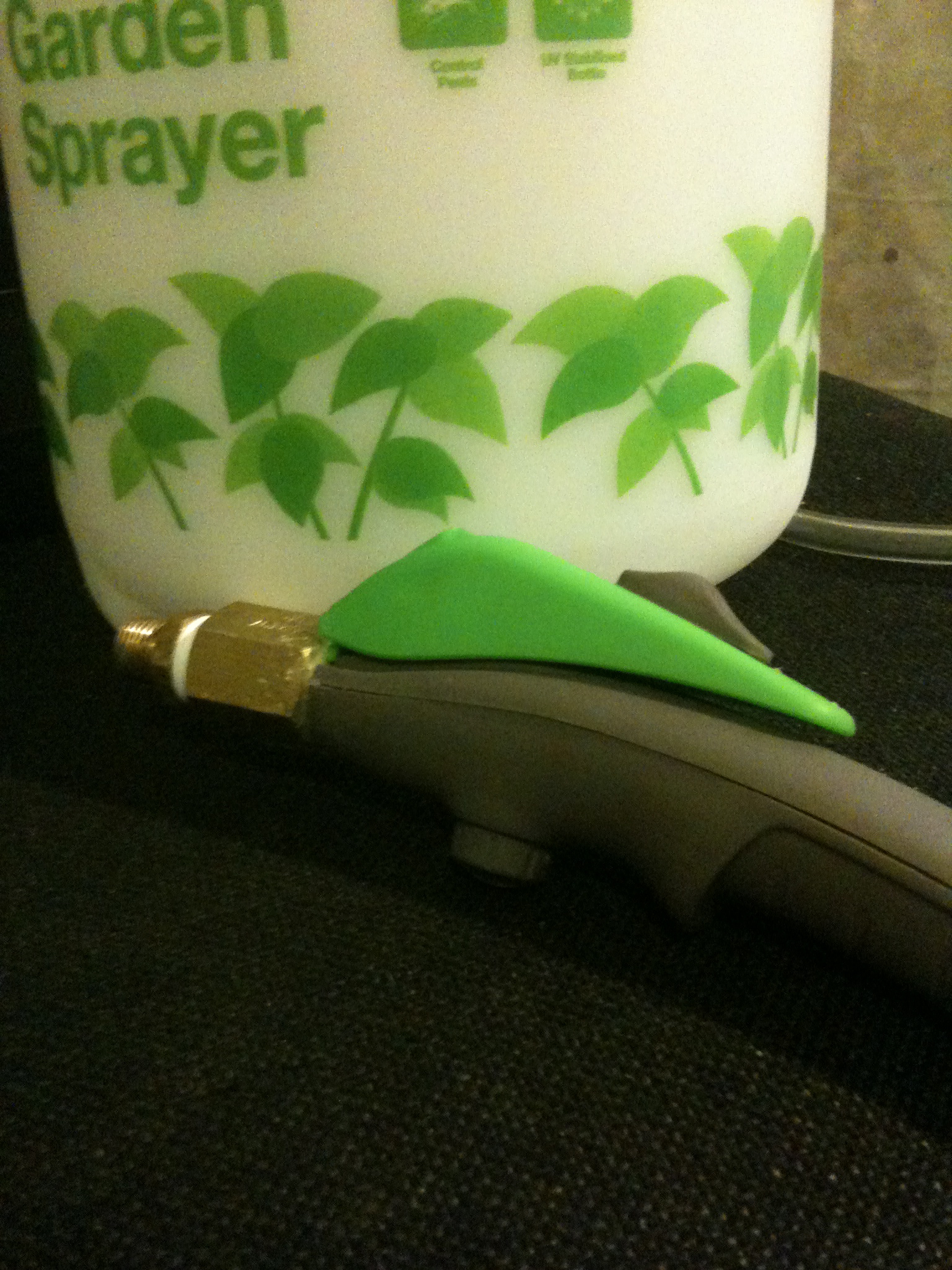
Primary Valve – Open
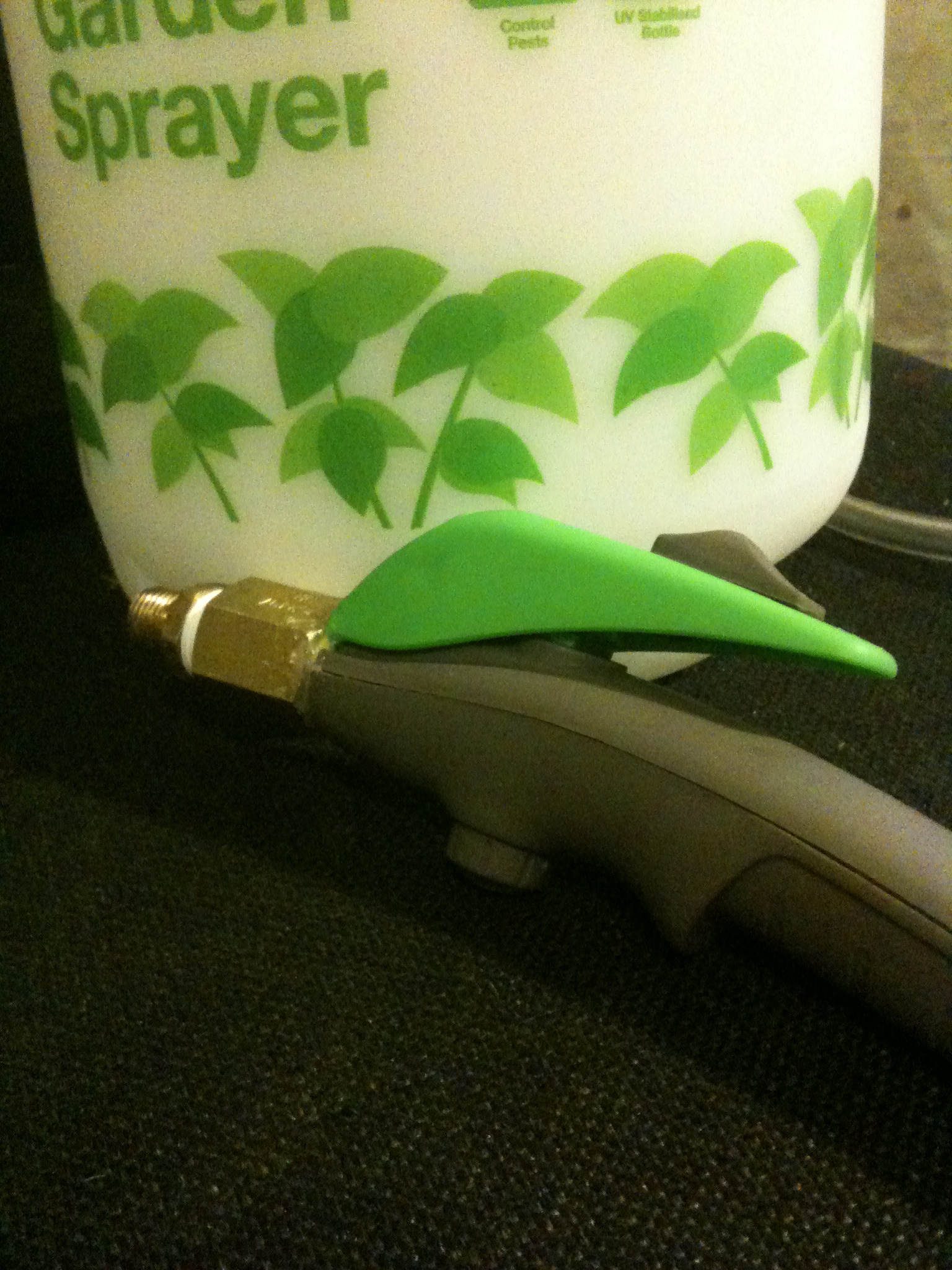
Primary Valve – Closed
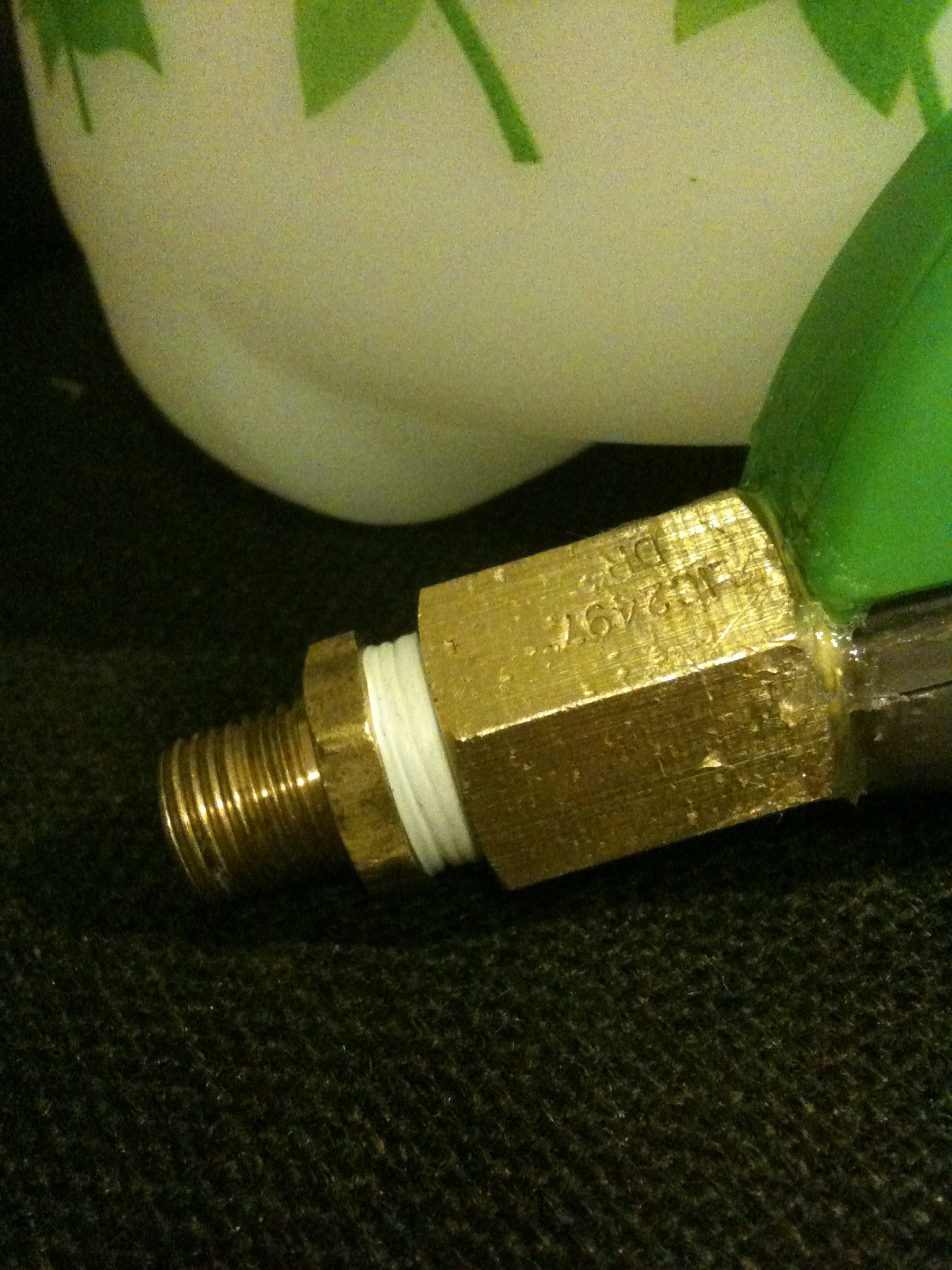
Plumbing Fitting
Field Airbrush
Much as I love airbrushes, they’re not that outdoors friendly. My current studio setup is a waist-high compressed air cylinder, going through a regulator and “powering” a pair of airbrushes. I’m probably going to replace this with a portable compressor setup soon, but in the meantime I wanted to be able to have the ability to use an airbrush when out of range of power. You can get aerosol cans to do the job, but I wanted something a bit more sustainable and able to be recharged in the field.
The main component is a 5 litre garden spray bottle. This has a pump handle in the lid to compress the air inside. Normally you’d put liquid in it that you wanted to spray, but here we’re keeping it dry.
The brass fittings are attached where the sprayer wand is unscrewed from the handle. The connection of plastic to metal is a bit tricky – you need to bulk it up with teflon plumber’s tape and silicone sealant to get a good seal. The brass fitting will cut into the tape and plastic, so the silicone is necessary. The smaller brass piece only needed tape to seal. I bought the brass fittings from a plumbing supplies place so they were able to match the airbrush’s airline cap thread and diameter.
The way it works is that you pump up the cylinder (which has a safety release valve so you can’t over-pressurise). The original trigger for the sprayer is still inline so that allows you to unplug the airbrush without losing pressure. It also allows you to isolate the metal / plastic connection from constant pressure. The trigger has a button to lock the valve open, so you don’t have to keep it pressed by hand.
In use, you get about 4-5 minutes continuous air from one fill of the tank. You can easily keep the system pressurised by continuing to pump the system with your other hand while using the airbrush.
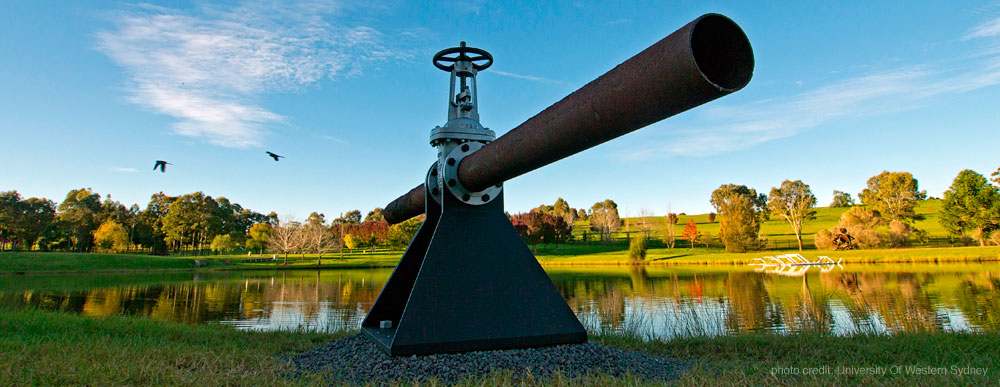
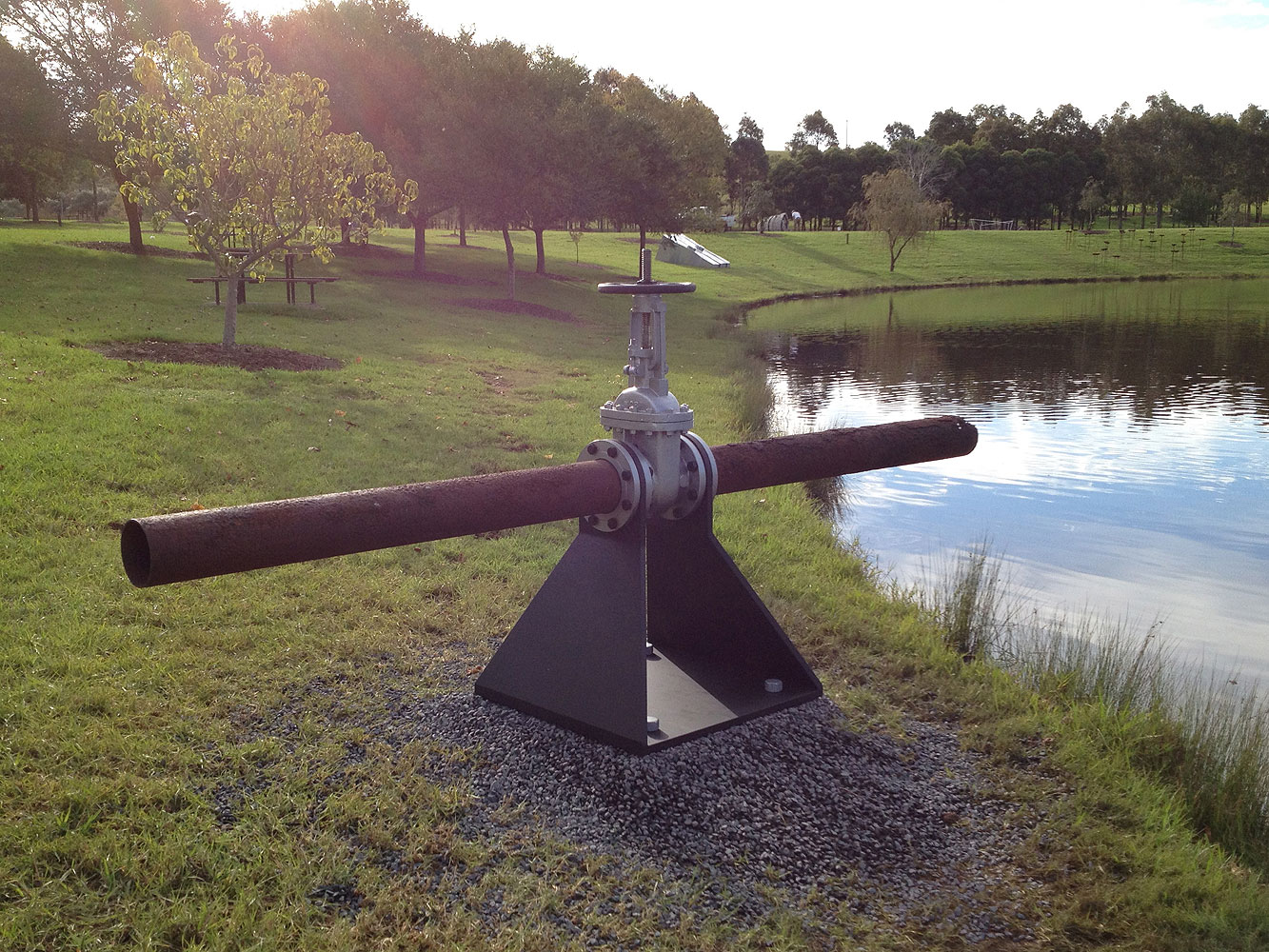
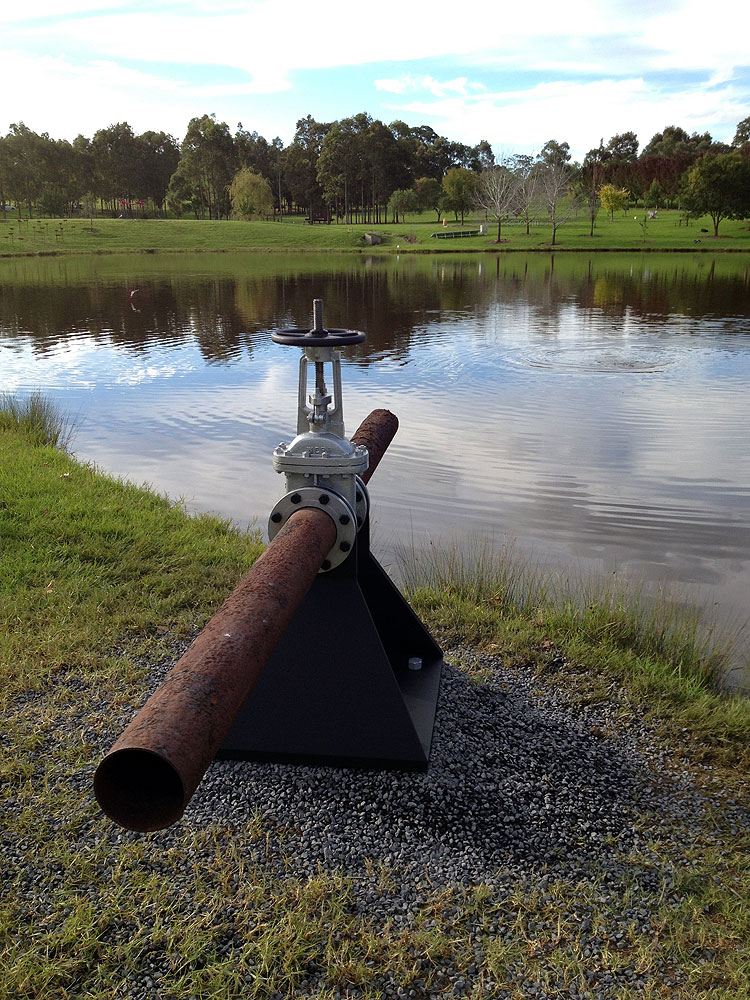
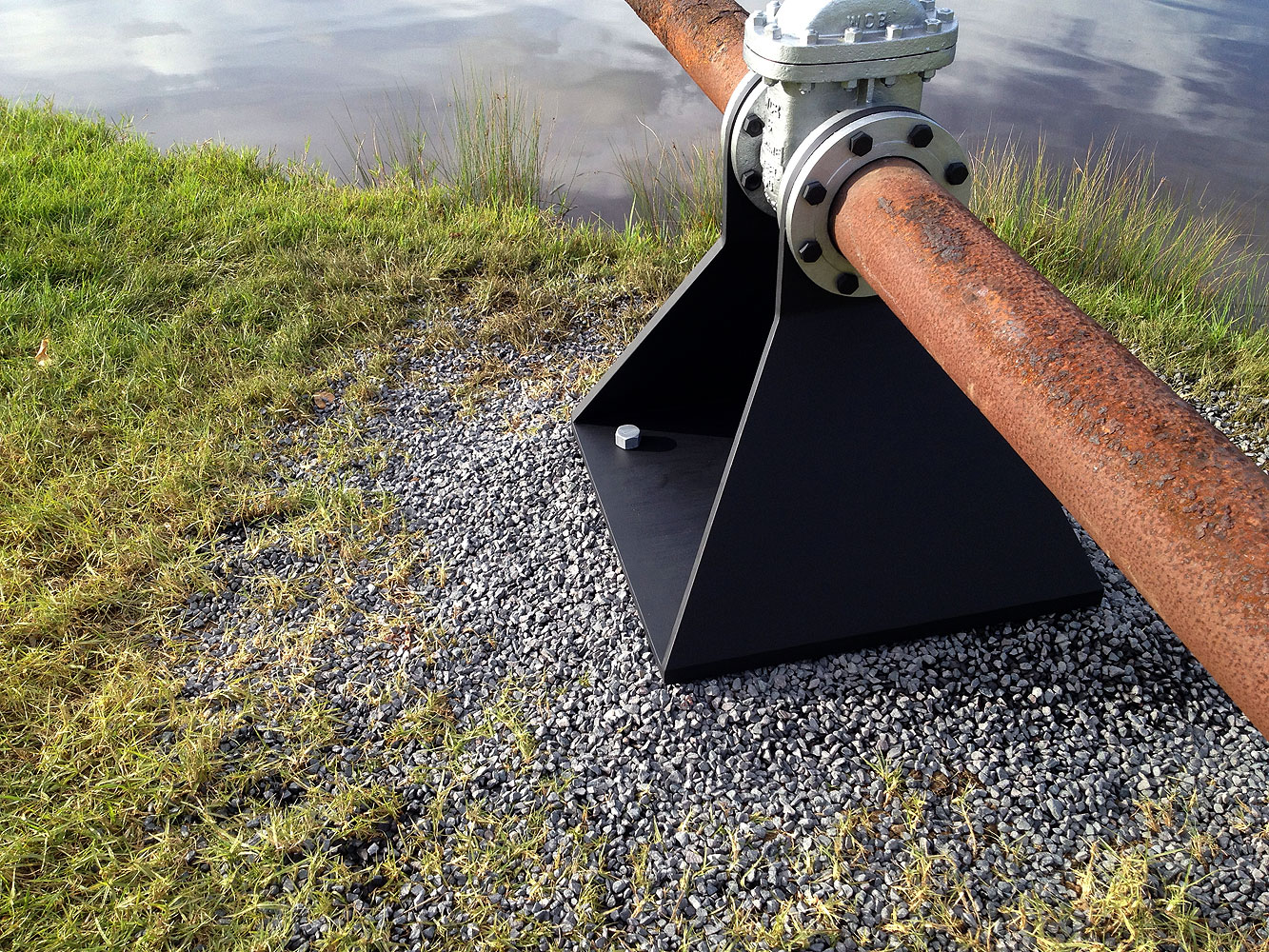
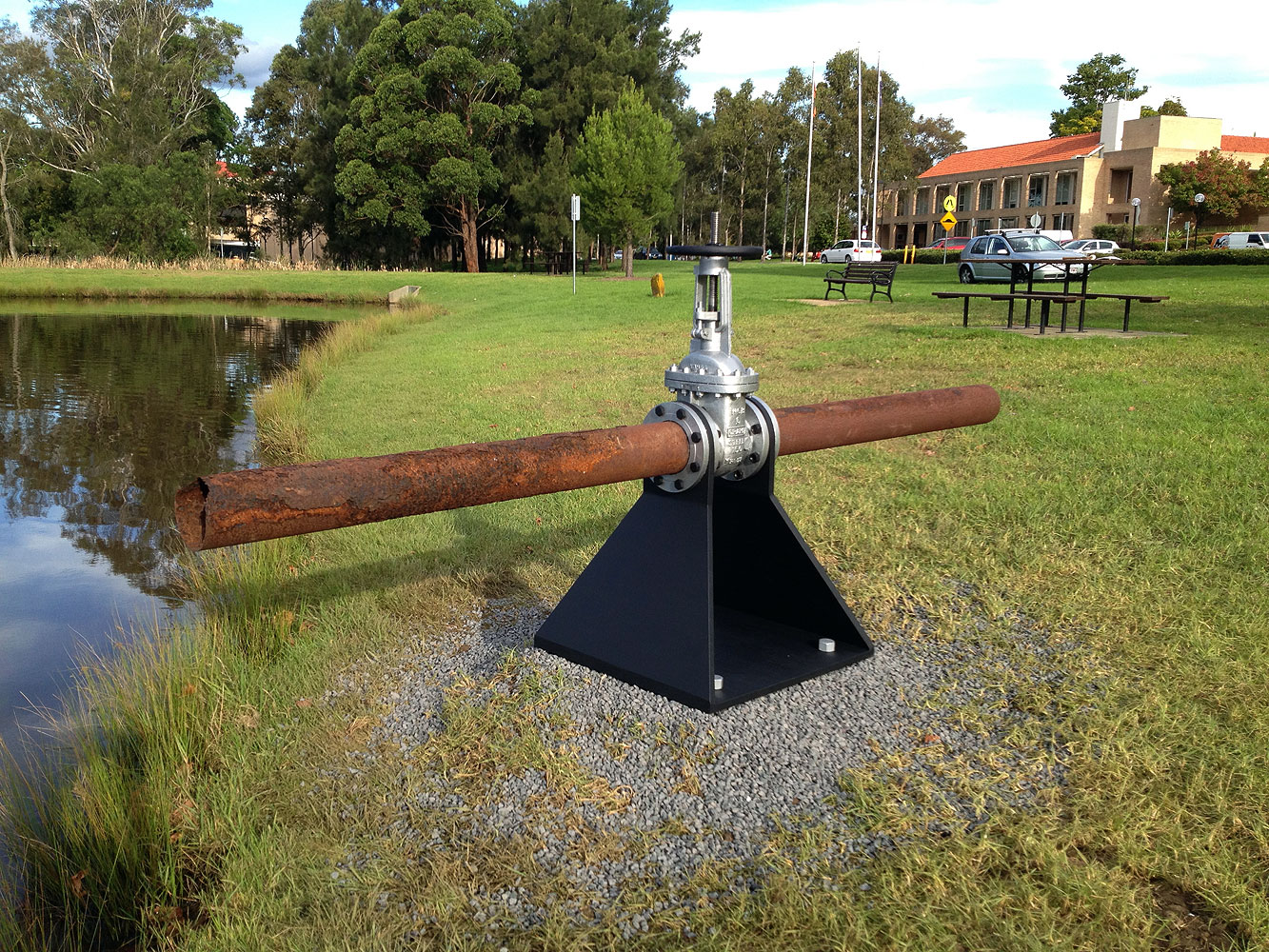
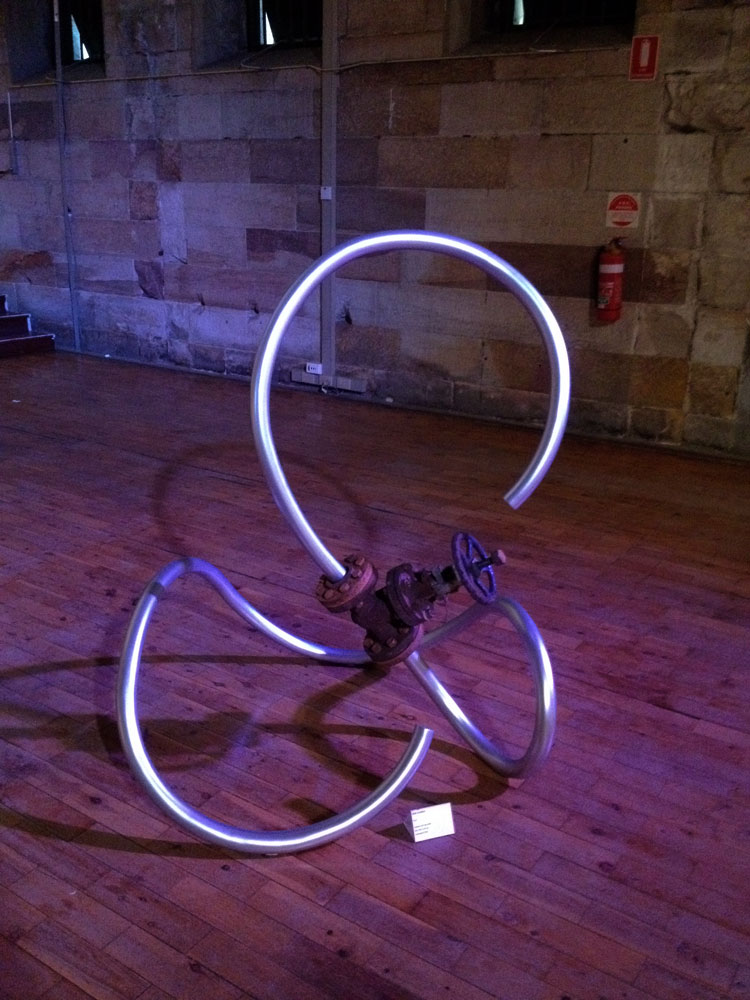
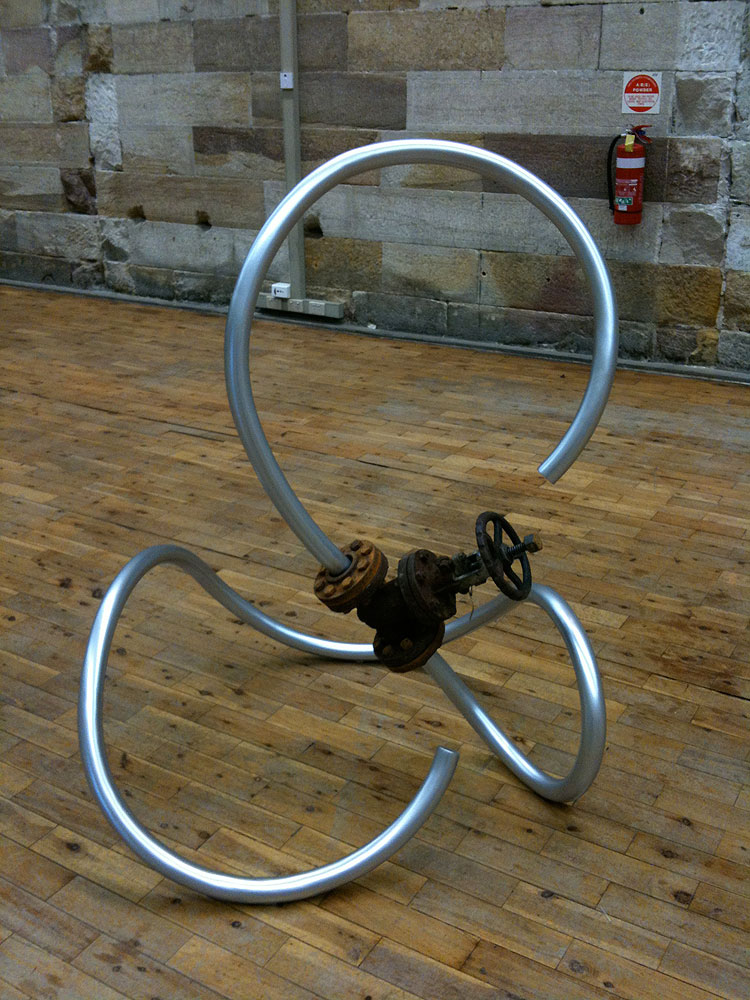
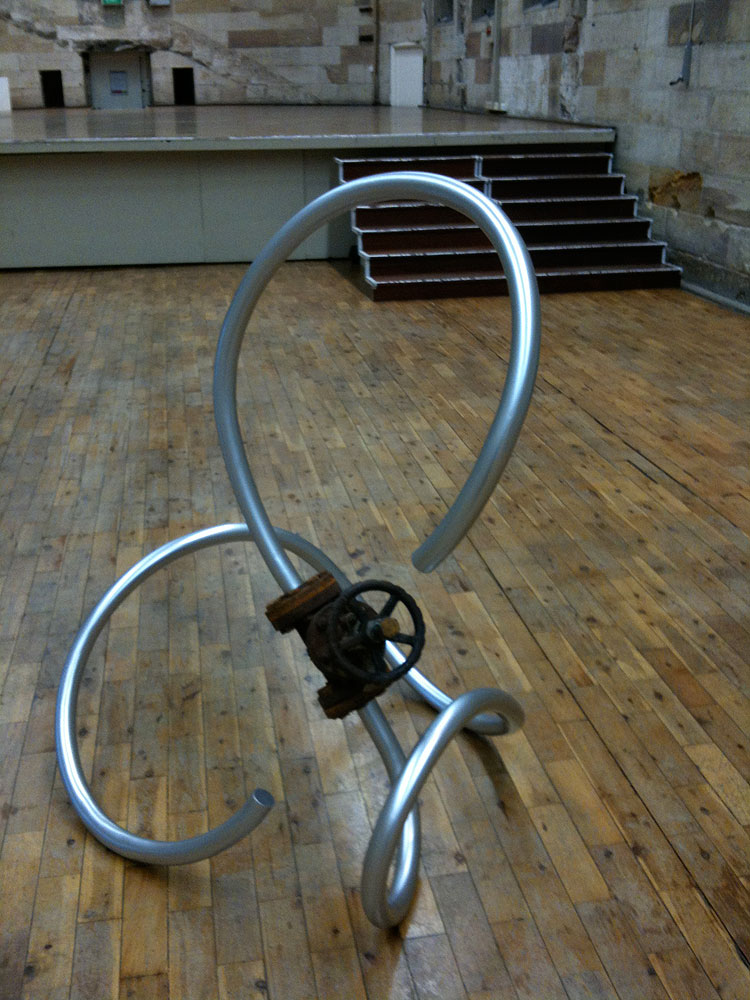
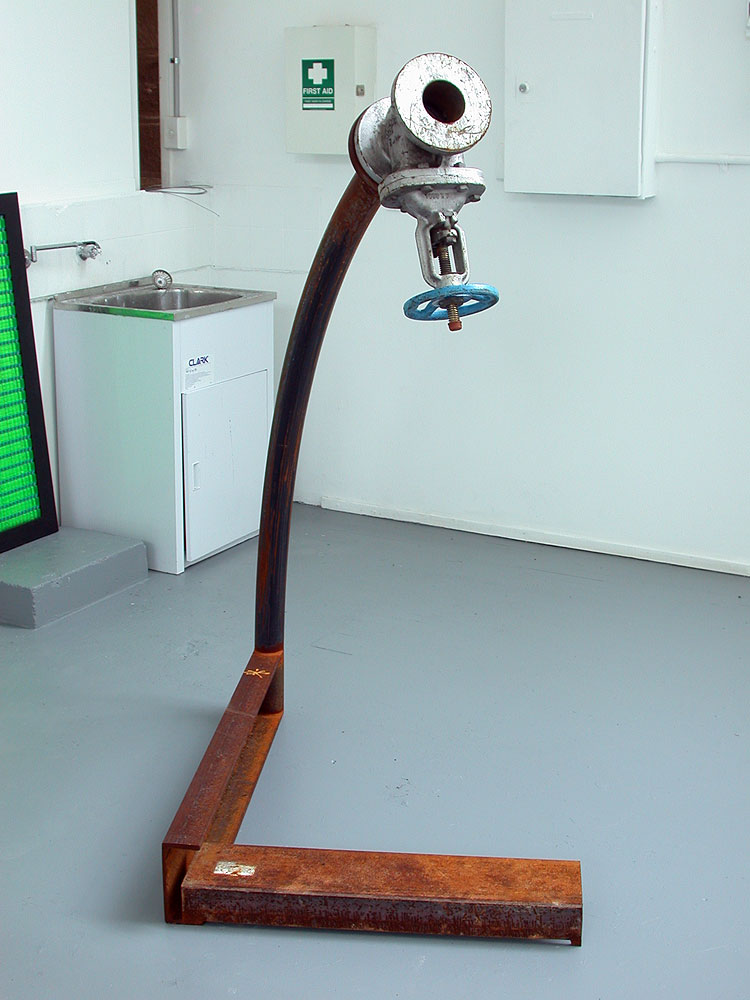
This valve is neat, a clean example of industrial-strength control and protection. It supports a corroded pipe, which left in the elements will corrode further, until it is replaced by new sections which can begin the corrosion cycle anew. Looking through the pipe, the half-moon view created by the valve’s partially closed gate, occludes and frames whatever vista the work is oriented towards.
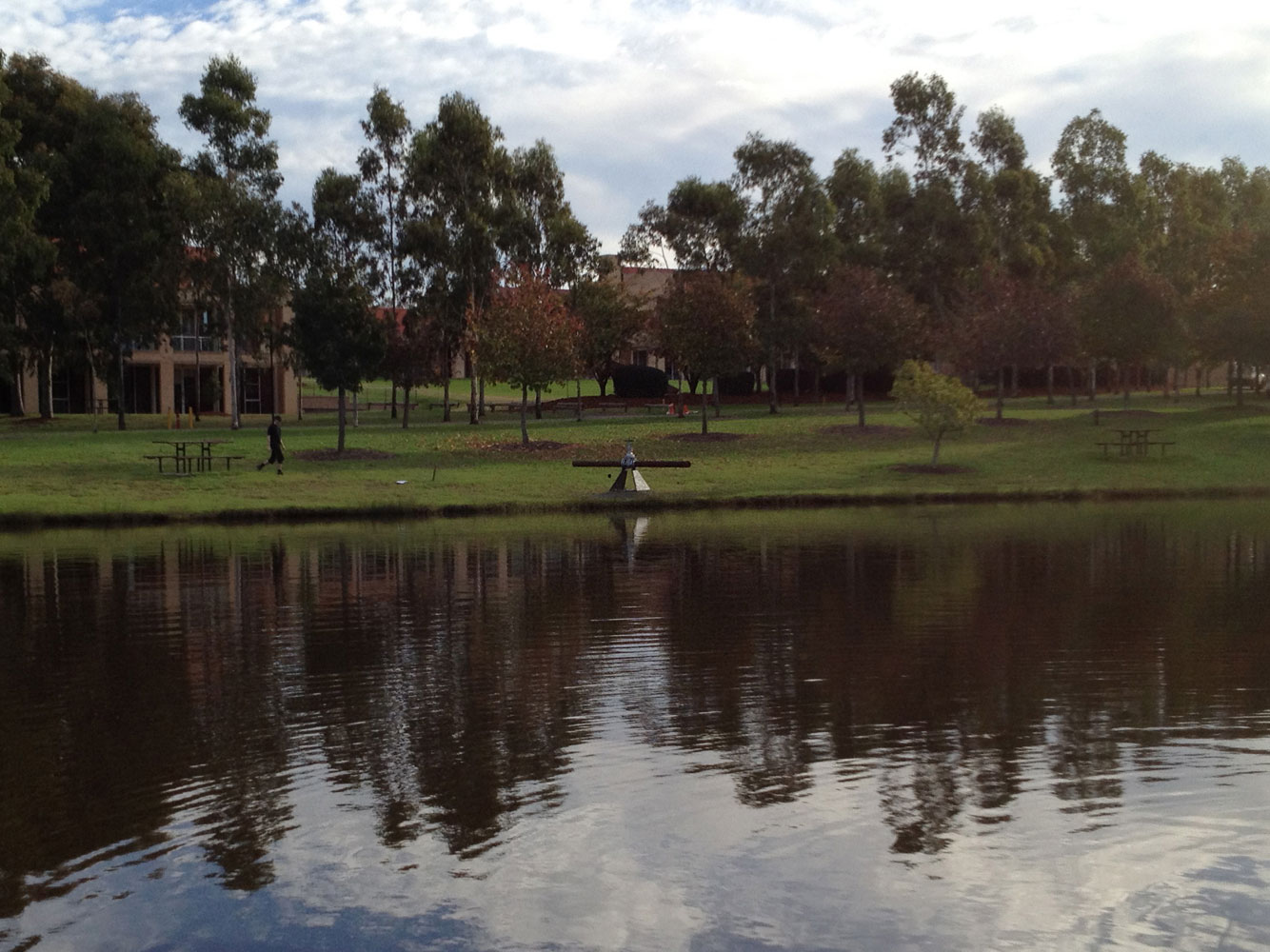
This work is a finalist in the 2012 University of Western Sydney Sculpture Award & Exhibition. The exhibition takes place from May 4th – June 3rd 2012.
The third of my large scale valve works, There. is a combination of right angles and curves in raw steel with the patina of industrial use worn proudly.